Dr. Chyrle Bonk has been practicing veterinary medicine since 2010. She lives in Idaho with her husband and two sons, where they spend their free time exploring the great outdoors that is right in their backyard.
When it comes to their litter box business, cats try to be fairly private. Most of the time, we cat parents don’t mind, but sometimes knowing how often your cat pees, the color, odor, or consistency can help us tell if our feline friend is sick or dehydrated. So, what’s normal when it comes to cat pee, and what’s not? Let’s find out.
Is My Cat’s Pee Normal?
Most kitties pee between two and four times a day. With that being said, for some cats, it’s normal to pee more or less often than that.
The frequency of urination can be affected daily by water intake, whether it’s hot or humid, how active your cat is, and what they have eaten.
What’s more important than the number of times your cat pees per day is noticing any different trends. Maybe your kitty is usually a five-a-day urinator but has only gone once a day for three straight days. Or maybe they go just a couple of times but flood the litter box with each visit. Noticing sudden changes in your cat’s urination habit will help you know if something could be wrong.
Peeing more than normal, coupled with increased water intake, can indicate kidney disease, diabetes mellitus, or a urinary tract infection. Peeing less than usual is a sign of dehydration or a urinary blockage. All of these issues should be addressed by your veterinarian.
What Color Should My Cat’s Urine Be?
You may hear the term “straw-colored” to describe the normal color of cat pee. That just means a light yellow color. Some cats may even have urine that’s more clear but is still considered normal. What you don’t want to see is cloudy urine with ‘floaters’ in it.
Cloudiness or debris in urine is often white blood cells or bladder epithelial cells. Both can signal issues such as a urinary tract infection or a bladder tumor. Other changes in the color, whether darker or lighter, can also indicate that something is wrong, and of course, pink or blood-tinged urine definitely warrants a trip to the vet.
Should Cat Urine Have an Odor?
If your kitty is spayed or neutered, their urine shouldn’t pack too much of an odorous punch. However, if you waited a bit too long to get your male kitty fixed, they may have developed that telltale tomcat, testosterone-fueled ammonia odor that will drive you out of the house.
Urinary tract infections can also lead to a foul odor in your cat’s urine and possibly some discoloration. Let’s not forget that neglecting the litter box cleaning for even one day in a multi-cat household can also create unwanted and unpleasant odors.
Why Is My Cat Peeing Outside of the Litter Box?
Even though most of the time, using a litter box comes as second nature to a cat, there are times where you may find accidents outside of those four walls. Not using the litter box can happen for several reasons, including:
1. Not Cleaning the Litter Box Frequently Enough
Kitties like a clean space, so much so that even one dirty clump will have some kitties searching elsewhere to do their business. Clean your litter box at least daily, especially if you have multiple cats. You can also increase the number of litter boxes in your household or get a self-cleaning one if this frequency is a problem.
2. They Don’t Like the Litter
Some cats can be picky about the litter in their box. They may not like the texture, fragrance, or the way it sticks between their toes. Unfortunately, some cats decide that the living room rug is a better place to do their business.
3. They Can’t Get Into the Box
If your kitty is getting older or has some medical issues that impede their mobility, getting into a high-sided or top entry litter box can be hard to do. Some kitties might have the ability but lack the desire to enter one of those harder-to-get into litter boxes. For these kitties, choosing a litter box with a lower entryway or a more open design may help.
4. Other Medical Issues
Besides mobility issues, other things like urinary tract infections, kidney disease, or diabetes could have your kitty peeing outside the litter box. This is often because they are drinking and urinating more, and sometimes, they have to go…now! They just can’t make it to their litter box.
Sometimes, as with urinary tract infection or blockages, it’s painful to pee, and they associate that pain with the litter box. Their fix for this is to avoid the litter box to prevent the pain.
Anytime your kitty isn’t using their litter box properly, see your veterinarian. They will be able to rule out medical issues and recommend products that may help your kitty love their litter box again.
Conclusion
How often your kitty pees and what that pee looks like can tell a lot about their health. If, as a cat parent, you’ve come to take your feline friend’s potty breaks for granted, it’s time to get nosy. Understanding what’s normal urination for your cat will help you to determine when something is abnormal. It can also help you and your vet quickly get a handle on an issue before it becomes a more serious problem.
Dr. Chyrle Bonk has been practicing veterinary medicine since 2010. She lives in Idaho with her husband and two sons, where they spend their free time exploring the great outdoors that is right in their backyard.
Yes, cats can have almond milk. If you add a little almond milk to your morning coffee, feel free to share a bit of it with your feline friend. However, as with most human foods that are considered safe for cats, you still should use almond milk in moderation.
Can Cats Drink Any Type of Almond Milk?
Before we get into giving almond milk to your cat, let’s first explore what almond milk is. If you’re new to non-dairy milk, or plant-based milk, you may be wondering what almond milk even is.
Almond milk is made by blending almonds with water and them removing any solid bits. It’s thick and creamy like cow’s milk but has a slightly nutty flavor. It still contains some of the health benefits that almonds do, like protein, vitamins, and minerals, but in much more watered-down levels. Most brands will be fortified with these things to boost the nutritional content.
With this in mind, there is nothing in almond milk that is toxic to cats, as long as the sweetener xylitol isn’t on the ingredients list. It also is lactose-free should you have a cat that’s sensitive or allergic to dairy.
However, some brands may have added sugars, sweeteners, or fats that can cause digestive upset.
How Much Almond Milk Can Cats Have?
Rather than give you an exact measurement of almond milk that is safe for kitty, let’s look at some guidelines.
Whenever you give your cat new human food treats, always start small and monitor the effects. Start with a few teaspoons and see how your cat reacts. If it’s smooth sailing, you can up that amount to a couple of tablespoons.
However, even if your cat takes to almond milk like a fish to water, it shouldn’t become a staple in their diet. Instead, use it only as a treat for rewarding good behavior, hiding medicine, or sharing a special bonding moment.
Keep the amount of almond milk that you give your cat in one sitting to under one cup.
What Are the Side Effects of Drinking Almond Milk?
Almond milk is used by people with lactose intolerance or those on a vegan diet as a substitute for cow’s milk. This is because it doesn’t contain lactose, the sugar that is most responsible for milk allergies or sensitivities. Believe it or not, most cats are lactose intolerant, so sharing a bit of cow’s milk with them may have detrimental effects.
Almond milk doesn’t contain lactose, but it does contain healthy nutrients such as omega fatty acids for a healthy heart, skin, and haircoat and protein. It may also be fortified with calcium and vitamin D, as well as other vitamins and minerals.
Almond milk is also low in carbohydrates and contains about half the calories of cow’s milk. It’s important to know that feeding your kitty a high-quality cat food will cover all of their nutritional bases, so there’s no need to give them almond milk as a dietary supplement.
Again, almond milk in itself doesn’t cause issues; it’s generally the additional ingredients put there to fortify the product that can become a problem.
Too much sugar or fat can cause digestive upset similar to those seen with cow’s milk and can include:
Vomiting
Diarrhea
Gas and bloating
Abdominal discomfort
If your kitty is experiencing any of these symptoms after drinking almond milk, cut back on the amount and frequency, or leave it out of their diet. Getting unsweetened versions may cut down on the side effects as well.
What Types of Milk Can Cats Drink?
In case you just can’t help yourself from sharing a creamy treat with your kitty, stick to the kinds of milk that are safe and least likely to cause problems.
With any type of milk, always start small and monitor your cat for side effects before you give them anymore. Keep it as a treat and not as a regular part of their diet.
1. Non-Dairy Milk
These are plant-based milk varieties that can be made from nuts, coconut, soy, hemp, rice, oat, or peas. They don’t contain lactose and are usually lower in fat and calories than cow’s milk. However, ingredients to avoid would include added sugars and sweeteners, mainly xylitol, which can be toxic to cats, and milk made from macadamia nuts. Also, avoid any added flavors, like chocolate.
2. Lactose-Free Milk
These are usually dairy milk with the lactose removed. It may be a better option for kitties with lactose intolerance or allergies. These types of milk should still be used in moderation as fat content may still be high enough to cause a problem.
3. Goat, Sheep, or Other Animal Milk
Cow’s milk isn’t the only dairy milk on the shelves. It’s not uncommon to find goat, sheep, or even camel milk in stores. These products still contain lactose, but at different levels than that of cow’s milk. They may be fine for kitties that don’t have lactose intolerance but can still be high in fat and sugar.
Types of Milk To Avoid
There are some milk products that you should avoid giving your cat, even in small amounts.
1. Sweetened Condensed or Evaporated Milk
These types of milk are way too high in sugar and fat to give your kitty, even in tiny amounts. Even small amounts may cause digestional upset.
2. Cream or Full-Fat
Though it may taste better, cream or whole fat milk is too rich for even those lactose tolerant kitties. Stick with a lower fat or skim version instead.
Even though a saucer of milk is often associated with kitties, it’s not necessarily the best meal plan, even if it is almond milk. Almond milk may be safe for your cat and packed full of beneficial nutrients, but it may also contain enough fats and sugars to give your kitty an upset tummy. Keep almond milk as a treat that’s given in moderation rather than as a staple in their diet. That way, they can still enjoy some nutritional benefits and not get sick.
Dr. Chyrle Bonk has been practicing veterinary medicine since 2010. She lives in Idaho with her husband and two sons, where they spend their free time exploring the great outdoors that is right in their backyard.
You’ve probably noticed that your cat spends the better part of their day grooming themselves. The constant licking, primping, and nibbling is for a good reason – they are trying to rid themselves of tangles, snarls, and filth so that they look their best at all times.
While your cat may be a professional at grooming, they sometimes need a little help. That’s where you come in, along with some handy tools, of course. No idea where to start? Let us help you.
How to Groom Your Cat
Cats possess the ultimate all-in-one grooming tool- their tongue. We’re not going to ask you to whip out yours to get this process started. Instead, let’s look at how you can groom your cat go over some of the tools that might help you along your way.
1. Brushing
Let’s start with the grooming activity that you’ll spend the most time on and will do most frequently – brushing. Depending on your cat’s hair length and shedding style, you may need to do a thorough brushing every day. Brushing is that important.
Brushing your cat’s hair helps remove dirt and dander, untangle snarls to prevent mats, and distributes natural skin oils to give their coat a healthy shine. It also allows you to collect some shed hair that would otherwise wind up on your couch, carpet, and clothes. For your cat, brushing is like a massage that stimulates blood flow to the skin and further deepens that human-animal bond.
For short-haired cats, once a week brushing will usually suffice, especially if they’re doing a good job of grooming themselves. Long-haired or thick-coated cats, like Persians and Himalayans, may benefit from more frequent brushing. Your cat’s brushing schedule will depend a lot on their hair coat type and their temperament.
Brushing Short-Haired Cats
Use a metal comb or rake. Start at the head and gently brush or comb your way down the neck and back.
Continue down the sides, ending with the chest and belly, brushing in the direction of your cat’s hair growth. This will help remove tangles and large pieces of debris.
You can then follow the same pattern using a bristle or rubber brush to remove smaller debris and loose hairs.
Brush their legs and tail last, since most kitties aren’t huge fans of these areas being brushed.
For heavy shedders, nothing works better than a Furminator. This tool has a fine comb with very closely spaced teeth that grab onto that loose hair and gently pull it away and hold it so that you can dispose of it in the trash later on.
Brushing Long-Haired Cats
Start with a metal comb or rake and comb the tangles out, starting at the abdomen and combing the hair upwards towards their head. This will help ensure that you get tangles out of the undercoat.
Comb their legs and tail by making a part down the middle and combing through each side.
Follow up with a bristle or slicker brush in the same pattern to get smaller debris and snarls and to spread those skin oils.
Take your time and make brushing a fun and pleasant experience. Detangle their hair gently, being careful not to pull at their hair. Also, don’t try to rush and go faster than your cat is comfortable with. While you brush, be sure to look at your cat’s skin for any irritation, discoloration, or pests. This also gives you a chance to look for new lumps or bumps that might need veterinary attention.
2. Bathing
The majority of kitties are only going to need a bath every couple of months as they get extra greasy or any time they get something sticky or overly dirty on their fur. If this is your first time bathing your cat, it never hurts to have an extra pair (or two!) of hands to help out.
Brush your cat first to remove excess debris and hair. This will make the bathing process a whole lot easier.
Gather your supplies. You’ll want to have everything within arm’s reach once you get the water going, so have your shampoo and a towel ready. If using a bathtub, a bathmat works well to provide traction.
Fill the tub or sink with 3-4 inches of warm water. Gently place your kitty inside. Using a spray hose or cup, wet your cat down while trying to avoid spraying them directly in the face.
Massage a gentle shampoo into the hair. Human shampoo can be too drying, so stick with a pet labeled product for the best results. Shampoo from head to tail, avoiding the face and ears as best you can. Work the shampoo down to the skin.
Thoroughly rinse the shampoo from your cat’s hair using the spray hose or cup. Make sure you have every last bubble gone, or else it can severely dry your cat’s skin out.
Use a washcloth to wipe the face and ears.
Dry with a towel.
Bathing can be extremely stressful to a cat, so be sure to take it slow and only do what they will tolerate. Having another person help you hold the cat will allow for better control and ensure that everyone stays safe.
3. Nail Trimming
Even though a cat’s toenails are retractable and you rarely see them, they can still get too long. Trimming your cat’s nails can prevent pain or problems caused by nails that are too long. It can also keep you safe by blunting the ends should you get caught by an errant nail.
Depending on your kitty, you may need to trim nails once a month, while others might only need it a couple of times a year.
You’ll Know It’s Time to Trim Your Cat’s Nails If:
They start getting their claws hooked in blankets or the carpet.
You hear that tell-tale click as they walk across a hard floor.
Older cats may need more frequent trimmings.
This is another project where having another person will help, but it isn’t always necessary.
How to Trim Your Cats Nails
Only attempt a nail trim when your kitty is at their calmest. Times that might work well are when your cat just wakes up from a nap or right after dinner. Let them warm up to the idea by first playing with their feet.
With a firm grip on your kitty’s paw, extend the nail by pushing on the toe pad.
Make a note of where the quick is so that you can avoid cutting the nail too short. The quick is the nail’s blood supply and will appear as a pink triangle that protrudes into the clear nail.
Using a comfortable and easy to use pair of nail trimmers, trim off as much of the clear nail as you can without cutting the quick. Do as much as you’re comfortable with. For some, that might mean only taking the sharp tip off, and that’s okay. Whatever you can trim will make a difference.
Continue through with the rest of the toes, rewarding your kitty when you finish. Repeat the process with the remaining paws.
*Note: Not every cat appreciates their feet being handled. If this sounds familiar, you’ll want to start by working with their feet before introducing the nail trimmers. While brushing, petting, or playing, be sure to touch their feet. You can even gently hold onto them so that they get used to the idea. Make sure your cat is comfortable with this before you try to trim toenails.
Grooming Your Cat’s Ears, Eyes, Teeth, & Anal Glands
Grooming your cat doesn’t end there. You’ll want to clean their ears, eyes, and even teeth periodically.
1. Ears
Cats get ear infections, ear mites, and hair in their ears. All of these can lead to scratching, head shaking, and general discomfort. Cleaning their ears can help prevent these issues and also give you a chance to notice other problems. Cleaning ears can be done as part of a bath, or anytime you have notice discharge, odor, scratching, or head shaking.
To clean your kitty’s ears, use a gentle cleanser, such as Epi Otic.
Pour the cleaner into the ear until it fills the ear canal. Watch out for head shaking as you do this; kitties tend not to like their ears filled with fluid.
Then massage the base of the ear to loosen debris and hair.
Using a paper towel over your finger, gentle dry out the ear as well as you can. Cotton swabs usually aren’t necessary and can cause some damage if you’re not careful.
Repeat for both ears.
If your cat has a lot of dark-colored discharge or is extremely itchy, see your veterinarian as they may have an infection or ear mite infestation brewing.
2. Eyes
Your kitty’s eyes aren’t going to take a lot of cleaning, usually. However, some cats have a touch of allergies or even an illness that may cause occasional discharge. If that’s the case, wiping them with a wet, warm washcloth will typically take care of it.
3. Teeth
Believe it or not, there are vets out there that will tell you to brush your cat’s teeth. And, believe it or not, some cats will let you! If your cat is one of these, great, do it! Using a tiny toothbrush or a finger brush, apply a good flavored toothpaste, and brush those teeth at least once a week.
While brushing their teeth is the best way to avoid dental disease and loose teeth in your cat, it’s not always possible. What you can do instead is provide hard kibble or treats to clean those teeth mechanically. But above all, monitor your feline friend’s smile for bad breath, dirty teeth, or red gums. Then see your vet for a dental cleaning as needed. A quick lift of the lip during brushings or baths is all that it takes to check.
4. Anal Glands
Most cat parents will want to leave this to a professional, but it’s worth mentioning. While anal gland issues are more commonly a dog problem, they can become impacted in kitties. Signs of an impaction include excessively licking their hind end, difficulty defecating, and a strong odor. Cats don’t often scoot the way that dogs do; it’s too indecent for their tastes. Having your vet manually express those anal glands will clear this issue up right away.
When grooming your cat, fun should be had by all. Don’t look at it as a chore and make sure your cat doesn’t view it as a punishment. Grooming keeps your cat’s hair coat clean, healthy, and shiny. It also gives the two of you a chance to bond and is the perfect time to check for abnormalities that could be detrimental.
Dr. Chyrle Bonk has been practicing veterinary medicine since 2010. She lives in Idaho with her husband and two sons, where they spend their free time exploring the great outdoors that is right in their backyard.
Cats are the connoisseurs of comfort (or pickiness). So much so that you can rarely tell where or what they will like to sleep on. Sometimes our best-laid plans for a cat bed come up short; your cat just moves the bed out of the way and sleeps on the floor.
If choosing your cat’s bed has you frustrated, this guide will help. We’ll look at some of the best cat beds available for different types of cats. The buying guide section’s information and advice will help ensure that you find the right cat bed for your furry friend.
A safe, comfortable, and eco-friendly cat bed that accommodate all sizes of felines from kittens to large cats.
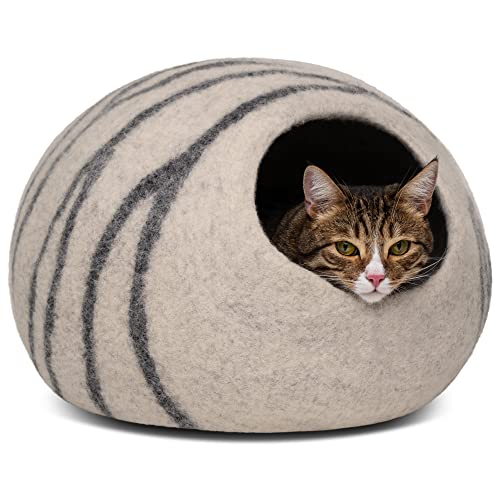
This cat cave from Meowfia is made from 100% merino wool, which is soft, non-toxic, and easy to hand clean. The bed is made through a process called felting, in which the wool, water, and soap are worked by hand pressure to form a unique type of “fabric.” This material is thick enough to hold its shape yet is still soft and pliable. These qualities make this bed very versatile as it can be flattened down into a nice pad or stood up to create a hidey-hole spot for play or sleeping.
Cats may like this bed because it serves multiple purposes:
It provides privacy or protection.
It provides warmth when it’s cold and cooling when it’s hot.
It’s roomy enough for even large cats
It’s comfortable.
It comes in various colors and can be easily cleaned with a vacuum or hand-washing in soap and water.
Being made of 100% wool means that this bed isn’t without a particular lanolin odor. This smell can often be decreased with some airing out, but some kitties might be extra sensitive to smelling like a sheep. Also, no machine washing allowed as it could shrink or distort the bed.
Pros
Eco-friendly
Versatile
Comfortable and insulating in both warm and cold weather
Cons
Hand-wash only
May have a sheep-like smell that cats might not like
2. Best Multipurpose Option – AmazonBasics Collapsible Cat House With Bed
A great choice for those who want versatility and easy storage.
Cats can choose to rest or sleep on the top for more freedom, or in the bed when they want more privacy.
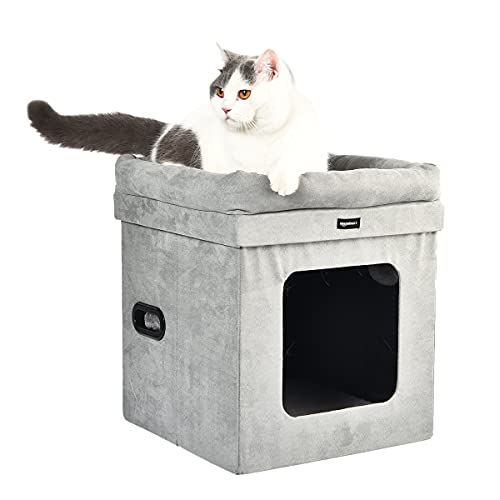
This is a bed and a playhouse in one. The cube shape of the Amazon Basics Collapsible Cat House allows cats to play or sleep inside or on top of the cube. The cutout holes can encourage your cat to play or provides a window for your cat to see out of. The entire cube is covered in soft suede with Sherpa mats for beds inside and on top. If you have multiple cats, they can both play or sleep in this bed at the same time. Or if you have just one cat that likes to have options, this bed will have you covered.
For easy storage or transportation, this cat house will collapse down flat. However, when assembled, it is sturdy enough to support the weight of a human. It comes in three different colors to accommodate any décor or taste.
This bed may come with a strong chemical smell, either from the fabric or the structural materials. That smell usually dissipates with some airing out. The plastic rings that line the circular cutouts may come off and get around your cat’s legs or neck. It may be in your best interest to either firmly secure those or remove them before giving this bed to your cat.
Pros
Has two different bed options
Works well for sleep or play
Folds down for easy storage
Cons
Strong chemical smell when first unpackaged
Your cat may be able to remove the plastic rings from the cutouts
3. Best Colder Weather Option – Aspen Pet Self Heating Bed
Perfect for cats who want to warm-up in colder rooms.
The heat-reflecting technology reflects your cats body heat to provide warmth and comfort to your furry friend.
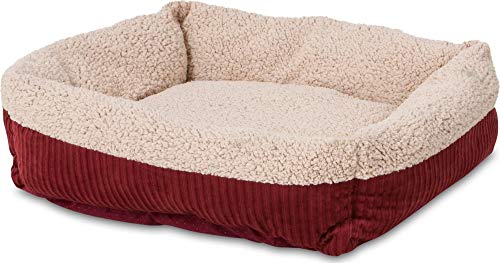
For cats that like to spend those cold winter days curled up in a tight ball, ready to sleep until spring, the Aspen Pet Self Heating Bed may be just what they need to be more comfortable. This bed features a Mylar layer, which space blankets are made of, to reflect your cat’s heat. The Mylar layer is covered by a soft faux lambswool surrounded in a durable corduroy to make this bed ultra-cozy, yet able to withstand use after use. There is also a non-slip coating on the bottom to keep this bed in place.
This bed comes in different shapes and sizes to suit your cat(s) specific needs. It is also lightweight to easily take it with you if needed for a comfier carrier experience.
This bed is not machine washable; rather, a gentle hand-washing will do less damage to the internal Mylar layer. It’s also not built to stand up to cats that like to dig or claw at their beds.
Pros
Self-warming for a cozier sleep
Non-slip to work well on wood, linoleum or tile floors
Cons
Hand-wash only
Cats may be able to shred the faux lambswool with their claws
4. Best Perch Type – K & H Pet Products Kitty Sill
An excellent option for kitties who want to sleep at a higher elevation or likes to look out windows.
The soft orthopedic foam and washable faux-lambskin washable cover provides lots of comfort for your cat.
The sill can support cats up to 40 pounds.
Cats are curious and like to know what is going on in their world, inside and out. Providing them with a perch-type bed, like the K&H Pet Products Kitty Sill will allow them to lounge and doze all with a view of the great outdoors. This bed is made from orthopedic foam with a faux lambskin cover that can be removed for easy machine washing.
It is also sturdy enough to support 40 pounds and doesn’t take any tools to secure it to any 2″ window ledge. This Kitty Sill size allows for multiple cats at once or for one cat to sleep in a sprawled out position.
This cat bed installs to window sills using Velcro, which seems easy enough. However, there can be an issue with the security of the bed. There can be installation issues that can cause the bed to fall even after a couple of uses. Also, keep in mind that many consumers have reported that they received their product without the necessary attachment parts. This makes it just a basic, flat bed rather than a perch for your cat to see outside.
Pros
Allows your cat to enjoy the great outdoors from inside
Comfortable and sturdy
Easy to assemble
Cons
Sometimes arrives without the necessary attachment pieces
Can fall off of window sill if not assembled properly
5. Best Blanket Option – Higher Comfort Super Soft Premium Pet Blankets
If your cat only sleeps in one place in your home, laying out a nice, comfortable blanket might be your best option.
Was designed to protect the blanket from dirt, fur or hair.
Made from an anti-pill material which is both machine washable and dry-able while preserving its softness.
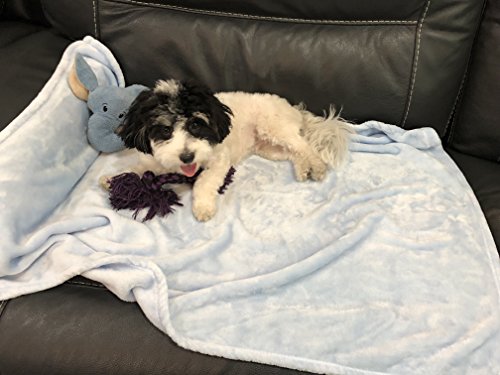
Blankets make a very versatile cat bed. Your cat can lay on them, under them, or curl around them. They are also easy to move from the floor to the furniture to the car. If you and your cat are into blankets, the Higher Comfort Super Soft Premium Pet Blanket may be worth trying. These blankets are made from faux mink, making them incredibly plush and snuggly.
They also are large, measuring 2 ½’ by nearly 3 ½’ so that they can be folded for extra comfort or draped over furniture to protect it from dirt and hair. Even though they are large, they are fairly lightweight, making machine washing easy. This fabric won’t shed or pill, so it can maintain its softness wash after wash. This product comes in four pastel colors.
Since this is a blanket instead of a structured bed, it may not provide as much comfort for kitties that like having a more confined space to sleep in. It also may be subject to being shredded by aggressive kneading or chewing.
Pros
Extra soft and plush
Easy to travel with
Versatile
Cons
No structural support
Can be damaged by claws
Best Cat Beds Buying Guide
Some of us have kitties that will sleep seemingly anywhere, the top of the refrigerator for example. Other cats tend to have rituals or habits they need to do before they enjoy a little shuteye. Whichever brand of cat you have, help make them more comfortable by knowing what to look for in a cat bed.
How Does Your Cat Sleep?
Cats may sleep in a variety of positions, depending on their preference and the space they’re sleeping in. However, they often have a favorite way of sleeping that a good cat bed might accommodate.
1. The Tight Ball
This is when a kitty likes to curl up tightly into a little ball. They will often tuck their face under a paw or their tail for even more coziness. This position is often used when it is cooler, in more confined spaces, or for protection.
Choose a bed with higher sides and a circular shape to accommodate the tight ball sleepers. Don’t get a bed that is so big that your cat’s body doesn’t touch on all sides when they curl up in it. You want it to be a snug, yet comfortable fit.
2. Sprawled Out
Some cats prefer to sleep sprawled on their side or even their back. Their objective may be to take up as much room as possible or increase their surface area to soak up more sunlight or cool off.
These kitties will prefer a larger, flatter type bed, maybe even without sides. Look into a blanket or bolster style bed where they can stretch out comfortably. Some may prefer to use the sides of a larger bed as a pillow.
3. Up High
Some cats prefer to sleep up high to watch the world go by without being noticed. For them, the position that they sleep in doesn’t matter as much as the location.
You can look into multi-functional cat trees with hammocks, other places for a bed up high on one of the perches, or install a shelf at a safe height that allows plenty of room for a bed and way to get up to it.
4. Hidey-Hole
Other kitties might like quiet darkness when they’re sleeping. They will seek out small, nearly enclosed spaces such as a cardboard box or behind furniture. Some may even go as far as sneaking behind the pillows on your couch.
Choose a bed that is enclosed on the sides and the top to satisfy these types of sleepers. Many options, such as teepees, cubes, or circular beds, will allow a cat to crawl in through a small hole and sleep hidden from the outside world.
Other Cat Bed Features to Consider
Once you’ve picked your cat’s perfect bed based on size, shape, and comfort, it’s time to look into some other attributes that will make it more convenient.
1. Washability
We all know that cat’s shed, and most of us welcome a little cat hair into our lives. But when it comes to cleaning that hair from their bed, most of us would prefer the washing machine. Depending on the material that a cat bed is made out of, it may only be hand-washable. Like wool, certain fabrics can’t withstand a washing machine, while cotton variations are easily laundered.
2. Size
Even though your cat may prefer a king-sized version of a cat bed, sometimes our living arrangements simply won’t allow for it. Choose a suitable bed for the space you have available and seek out multifunctional furniture when applicable to save space. An example would be a cat tree with a bed or a cube that allows for sleeping or play.
3. Movability
Sometimes, it’s nice to have a portable cat bed. This is especially handy for frequent travelers or when your cat needs a comforting item to take on a stressful trip. Keep in mind that a fancy hammock may be comfortable for kitty, but won’t pack well in a kennel.
4. Durability
Some cat’s like to break their beds in with a little violent kneading. If your cat is one of these, you’ll want a bed that can withstand it. You may choose to go with a less plush and more durable fabric covering if your cat tends to be a little more destructive.
Dr. Chyrle Bonk has been practicing veterinary medicine since 2010. She lives in Idaho with her husband and two sons, where they spend their free time exploring the great outdoors that is right in their backyard.
How to Find the Best Litter Box for Your Large, Loveable Friend
There are a few things more frustrating as a cat parent than when your large feline friend refuses to use their litter box. Sometimes their reasons for not using a litter box can be medical; other times, it can be a size issue. Choosing a litter box that can accommodate your large furry buddy will make them more comfortable and make your life easier.
Here is a list of the five best litter boxes for large cats that are worth considering.
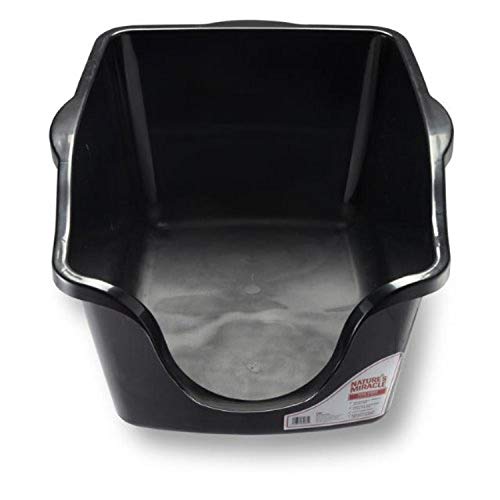
1. Best Overall Choice: Nature’s Miracle High Sided Litter Box
Perfect for those who are looking for a simple and inexpensive large litter box.
Comes with high sides to prevent litter scatter and a nonstick surface for easier cleaning.
For a very simple, yet large cat litter box, look at Nature’s Miracle High Sided Litter Box. Measurements on this litter box come in at 23.4″ x18.25″ with 11″ high sides. It’s large enough to accommodate even the biggest feline or just those that think they are big.
This litter box also has a lowered entryway for easier access, and that serves as a handy pour spout when it’s time to dump the dirty litter from the box. It has a nonstick surface to help prevent that cement-like crud left over from clumping litters. It’s also inexpensive enough to purchase several should you need them.
For kitties that like to throw litter, the lower entry side could prove to be a problem. The opening is only about 3″ off of the ground, meaning that it’s easier to get into but won’t hold the litter in as well on that side. It also can mean more litter being tracked around your house.
Pros
Large enough for bigger kitties
High sides keep what should stay in, in
Inexpensive
Cons
The lowered side may be too low to hold litter in
Not covered, so odors may be a problem
2. Best Covered Box: Petphabet Jumbo Hooded Litter Box
Great for cats who prefer a covered litter box with lots of room.
Can also well with multiple cat families, as two average sized cats can fit inside simultaneously.
If you or your large cat prefers a covered litter box for added privacy or odor control, make sure it’s a big one like the Petphabet Jumbo Hooded Litter Box. This litter box measures 24.8″ x 20″ with 7.8″ sides. The sides are still high enough to keep litter inside but without being so high that your cat has trouble getting in.
The cover on this litter box can be quickly removed for easy cleaning. The door opening is large, and it doesn’t have a gate to hinder those more scaredy cats from getting in or out. It also comes in multiple different colors and has a nonstick finish to further aid you in cleaning.
The removable sides and top of this cover are clear, which can make some kitties uncomfortable since it may defeat the purpose of adding privacy. The seam between the top cover and the bottom box isn’t water, or urine, proof. If your cat is the “spray all over the place” type, there is a chance urine will leak out onto your floor.
Pros
Large enough for two cats at once
Covered for added privacy and odor control
Easily cleaned
Cons
The seam between top and bottom isn’t urine proof
Clear plastic cover might not provide enough privacy
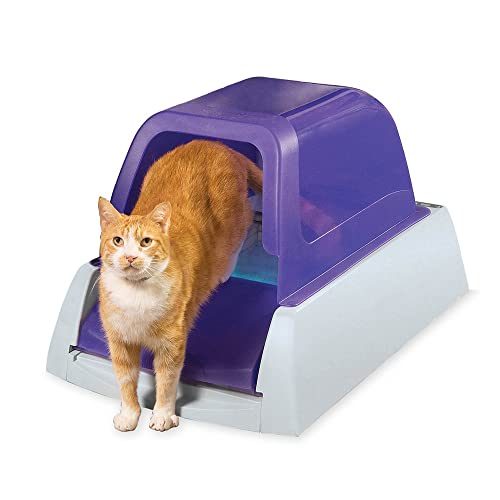
Excellent for those who don't want to bother with cleaning the litter box after each use.
The crystal litter is also 99% dust free and low-tracking to keep your house clean.
If scooping cat litter isn’t your thing, an automatic, self-cleaning litter box might be more your style. And if you have a larger kitty, you’re going to want that self-cleaning litter box to be larger. The PetSafe Scoop Free Ultra Automatic Self-Cleaning litter box is just that. It measures 28.5″ x 20.5″ x 11.5″ high. This is a covered box, offering your cat privacy and providing some odor control.
This litter box uses crystal cat litter, which is virtually dust free and has low trackability meaning a cleaner house for you. Your large kitty will enjoy a fresh litter box every time with minimal work from you. All you have to do is empty the tray every few weeks. This box is big enough to feel roomie even with larger cats. It also comes in top entry or front entry styles and multiple colors.
Automatic self-cleaning cat litter boxes use a motor to power a rake to remove soiled litter. While you can set the automatic timer to start cleaning way after your cat leaves the box, it can still be scary. They may wait around to see what the noise is and then choose not to go back in again. This litter box is also more expensive outright, and the crystal litter replacements are more expensive than most clay or other types of cat litter.
Pros
Self-cleaning, no scooping required
Covered for privacy and odor
Cons
More expensive
Noise may scare your cat
4. Best Non-Plastic Option: iPrimio Ultimate Stainless Steel XL Litter Pan
A great option for those who want something more durable than plastic, while still being easy to clean.
This stainless steel pan doesn't absorb odors and is 6 inches deep, which is great for cats who like to dig deep.
Plastic litter boxes can absorb odor, harbor bacteria, and endure scratches that make the surface rough and more likely to stick.
Stainless steel litter pans don’t do any of those things. For a simple litter box for large cats that is stainless steel rather than plastic, look into the iPrimio Ultimate Stainless Steel XL Litter Pan. It measures 23.5″ x 15.5″ x 6 inches high. It won’t rust or stain.
With sides that are 6″ high, this litter box features a deeper depth than most regular litter boxes, but without being so high that a kitty will have trouble getting inside. That makes the lower access spot unnecessary to help keep all litter where it should be. The stainless steel is easy to clean and keep sanitary. It also has rubber feet on the bottom to secure the litter box in one spot.
This litter pan is shorter sided than the others on this list. While it’s still deeper than regular litter pans, you may have trouble with the kitties that prefer to spray or perch on the side of the litter box while doing their business. There have also been some issues with either the shipping process or even the manufacturing process of these boxes. Some people have been known to receive stained or even rusty boxes.
Pros
Won’t harbor odor, bacteria, or stains
Large enough for bigger cats
Simple design that won’t leak
Cons
Cats can pee over the side
Inconsistency with product arriving rusty or scratched
5. Best “Out of the Box” Design: Petmate Booda Dome Clean Step Cat Litter Box
This dome shaped litter box gives your cats the most privacy and has a charcoal filter to absorb odors.
The steps at the entrance help to wipe litter off of your cats paws to prevent litter from getting everywhere.
This litter box is a little different than most for your larger kitty. This round box features a 21″ diameter with a covered, walk-out design that will contain odors and help keep litter from tracking all while giving your cat total privacy. The litter box sides are rounded, so there are no corners that will need extra digging to remove litter. The steps also remove the litter from your cat’s feet before they can track it around.
The circular shape of this litter box makes it completely enclosed for those kitties that like total privacy. It also helps trap the majority of odors and has a carbon filter insert to neutralize them. You may appreciate the sleek design and disguise of this litter box as it doesn’t look like any that you might have seen before.
Like other covered litter boxes, the top cover and the bottom pan separate in the middle for easier cleaning. This seam isn’t urine proof, and if your kitty sprays pee on the walls, it can make for a messy cleanup.
Litter boxes are not created equal. It may surprise you how many different options there are for a relatively straightforward and simple product. While many of the differences in litter box options may just be bells and whistles, you have to opt for the correct size for your cat or cats. A litter box that is too small may have your kitty peeing on the floor simply because they can’t fit inside or because they don’t possess that aim to make it into a small space.
Smaller litter boxes also don’t hold as much litter, making those picky kitties that like their litter at a certain depth to search for alternative resources. Also, smaller litter boxes have to be cleaned more frequently.
How to Choose the Correct Size Litter Box For Your Cat
You may have heard the golden rule is to have one more litter box than the number of cats you. This allows kitties to have their choice of bathroom spots should one litter box be occupied or dirty.
As far as the litter box’s size goes, the golden rule here is to have a litter box about 1 ½ times the length of your cat, minus the tail. The width will then be based on the length to make a nice rectangular shape.
You can measure your cat from the base of their neck to the base of their tail for a more accurate fit.
If you choose to go with a covered litter box, add a couple more inches to accommodate for the sides, and make sure that it is at least 1 ½ times their height.
For some of those Maine Coon types, this can be a very large litter box, and that’s ok. You’re going to want that extra size so they will have plenty of room to turn around, squat or sit, dig, and comfortably get all of the waste within the box.
Another word of advice is to choose one with higher sides. This will help decrease the amount of waste that escapes over the top should you still have a kitty with trouble aiming or one that gets a little out of control when digging. If your cat is older or has difficulty getting into a high sided box, choose one with a lower entry point.
Other Litter Box Options for Larger Cats
Once you have the correct size of the litter box nailed down, you can look into other features that will make your cat’s potty breaks easier on them and even you.
1. Covered vs. Open
Some other features that you might want to check out in litter boxes for larger cats would be whether you want to be covered. Covered litter boxes offer some privacy for cats that don’t want to do their business where everyone can see. It also provides some odor control as it will keep those odors better locked inside the litter box rather than lingering out into your home. Be aware that some cats might not appreciate the stronger odor smells inside the litter box, so frequent cleaning is a must.
2. Self-Cleaning vs. Manual
There are many different options for self-cleaning litter boxes. Some plumb into your water and sewer so that you never have to touch it, while others automatically comb through the litter after each use. While self-cleaning litter boxes may be more convenient for you, they can be downright scary to your cat. After all, there will be noise and movement involved, sometimes enough to keep your kitty out of the box.
3. Miscellaneous
After that, you can look into different styles that suit your décor. There are litter boxes that look like end tables, are triangular to fit in corners, or have different colors or covers. You can also look at ones with antimicrobial coatings to help with odor and bacteria buildup, and then, of course, there is a vast variation in the prices.
Conclusion
Your large kitty has lots of room in their heart, so make sure that their litter box has lots of room too. Choose a litter box for your larger cat based on size above all else, and then look at other features that might be nice additions. Again, it’s essential to choose a box that is at least 1 ½ times the length of your cat minus their tail, and at least 1 ½ times their height if you choose to go with a covered style. You’ll keep your larger cat comfortable and your floors cleaner if you do.
Dr. Chyrle Bonk has been practicing veterinary medicine since 2010. She lives in Idaho with her husband and two sons, where they spend their free time exploring the great outdoors that is right in their backyard.
Kitties love to scratch; there’s no doubt about that. Unfortunately, what they sometimes choose to scratch is your new leather sofa.
Scratching or nail sharpening is a very normal and common behavior of cats. To let your cat be a cat, and still protect your furniture, getting a scratching post would be a good idea. Here is a list of some of the best cat scratching posts you can find.
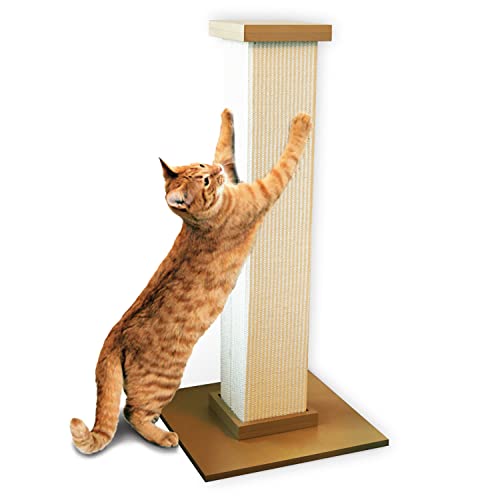
1. Best Overall: Smart Cat Pioneer Pet Ultimate Scratching Post
Perfect for kitties who need a sturdy post and love to stretch out tall while scratching.
For those kitties that love a good stretch, the Smart Cat Pioneer Pet Ultimate Scratching Post will meet their needs. It’s 32″ tall, allowing for a full extension stretch and muscle toning. It comes with a wide wooden base and a 16-pound weight that will keep this scratching post planted even with rough scratching from your cat. It is also covered in woven sisal to provide a more durable scratching surface that won’t fray or drop small pieces all over your floor.
This scratching post has an easy assembly and a neutral coloring to match any décor. Since this product is durable and won’t fray, it will look good no matter where you put it and how much your cat uses it.
Even though this scratching post is sturdy, it may still be a tipping hazard when your cats jump on it. Also, some cats don’t take to the woven sisal right away as it has a texture that may not feel as natural as other scratching post materials. Finally, the assembly may be easy with only two screws to secure, but those screws require an Allen wrench to tighten it with, something that the average cat parent might not have.
Pros
Tall enough for a full stretch
Wide base and heavyweight to prevent tipping
Durable woven sisal to decrease wear and tear
Cons
Cats may need some time to get used to the woven sisal material
May requires an Allen wrench for assembly
Expensive
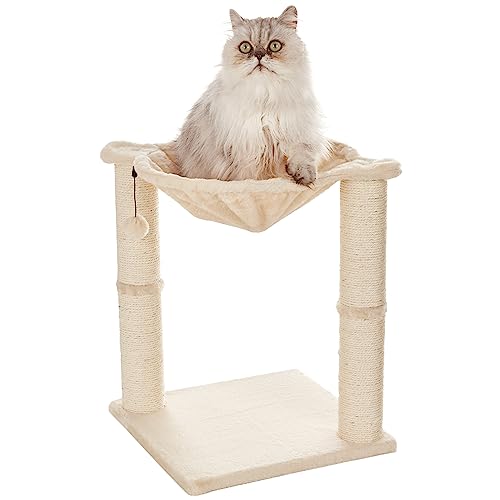
2. Best Combination Post: Amazon Basics Cat Scratching Post and Hammock- Best Combination
A great space-saving choice for those who want a scratching post and rest area for your cat in one unit.
For cats that like to scratch and then lounge, this combination cat scratching post and hammock from Amazon Basics might be just what they’re looking for. This product features two 15″ tall scratching posts with a hammock draped between to allow multiple cats to scratch at once or for your single kitty to choose. This may also be a good choice for cat parents that have limited space and need multi-functional furniture.
The scratching posts are covered with a sturdy jute fiber that will withstand many scratchings without littering your carpet with tiny bits of fiber. The hammock is made from plush and comfortable fabric, and the base is covered with soft carpeting to provide another area to satisfy your cat’s scratching desires. It also comes with an attached toy for your kitty to bat around.
This scratching post isn’t as tall as some of the others out there. So, if your cat wants to enjoy a full stretch while they scratch, they won’t be able to with this product. Also, as with any dangling toy, it won’t last forever. If your cat plays with the attached toy often, it probably won’t stay attached for long.
Pros
Two scratching posts to choose from
Elevated hammock for lounging
Durable jute covering
Cons
Fairly short in height
Toy breaks off easily
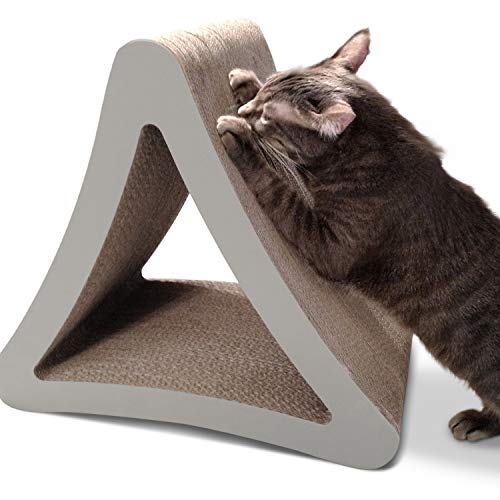
3. Best Cardboard Scratching Post: PetFusion 3-Sided Vertical Cat Scratching Post
Excellent design for cats that want a variety of different scratching areas.
For those kitties that prefer cardboard scratching posts, the PetFusion 3-Sided Vertical Scratching Post may fit the bill. Its unique design allows for scratching on both vertical and horizontal surfaces. The sides are wide to give your kitty enough room to get the job done, and the cardboard is soft, yet effective at sharpening those claws.
Additionally, this scratching post’s shape makes it an excellent playhouse for your cat to hide and crawl through. You can also rotate it so that there are six different sides to use, making it longer lasting than some other cardboard cat scratching posts. And it comes in two different sizes to accommodate those larger scratchers.
This product is made from cardboard, so it is lightweight and easily pushed around and tipped over by kitties. This may contribute to some cats not liking this product or needing some encouragement to use it. The cardboard isn’t replaceable, so once it’s scratched up, you have to buy a whole new unit rather than just the cardboard refills.
Pros
Unique design provides many scratching surfaces
Doubles as a toy
Made from 100% recycled cardboard
Cons
Lightweight and easily pushed
Cardboard is non-replaceable
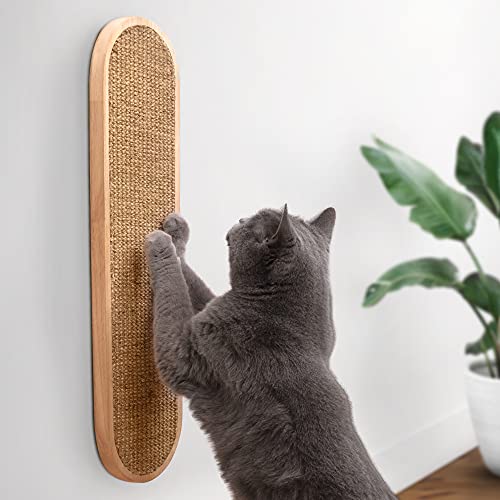
4. Best Mounted Scratching Post: Ruby Road Cat Scratching Post for Floor or Wall
A versatile scratching post that can be used both on the floor or mounted to a wall to save room on space.
This scratching post works either vertically or horizontally, depending on your cat’s needs. It has a sturdy wooden frame surrounding a durable sisal scratching surface that won’t leave flakes or chunks on your floor. This scratching post has rubber feet on the bottom to help keep it from moving and to decrease banging when hung on the wall.
This scratching post is more compact than tower type scratching posts, so it may be better for space-saving areas. This also might make it a good choice for those traveling cats. Everything is included with this product to use it in any way that you or your cat prefers.
Since this is a simple, compact scratching post, it is also easily moved or pushed around by your cat when used on the floor. This may deter some cats from using it if they don’t like dealing with moving objects. The wooden frame can also come unglued from the scratching surface, especially when hung and used by aggressive scratchers.
Pros
Very versatile
Mobile
Everything included for assembly
Cons
Lightweight and easily pushed
The frame may come unglued when hung on the wall
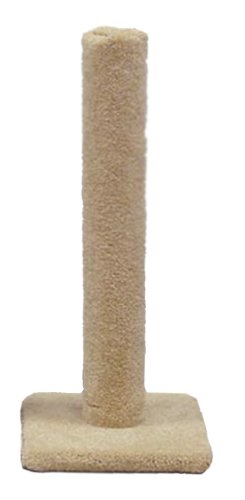
5. Best Carpeted Scratching Post: North American Pet Classy Kitty Carpet Scratching Post
For cats who want a more comfortable, softer scratching surface.
For cats that prefer a softer touch, the North American Pet Classy Kitty Scratching Post features a soft carpet covering a shorter pile than you would likely find on your floor. This shorter length makes it more durable and less likely to shred. This scratching post is tall, for all kitties who like a good stretch. It reaches 32″ tall, yet is thin in diameter and lightweight enough to be easily moved from room to room.
While this product might be lightweight, much of that weight is in the base making it more resistant to tipping and falling. The carpet seems to hold up well to frequent scratching, and this post is easily rotated if one side should wear more quickly than the rest.
Like any carpet scratching post, this one will shed as it gets used. This is especially true for vigorous scratchers. Another concern with carpeted scratching posts is cats getting their claws stuck in the plastic grid that makes up the carpet’s back. This might result in injuries to claws or toes if they stuck in the carpeting.
Pros
Tall enough for a full stretch
Lightweight and easily moved
Sturdy and hard to tip over
Cons
Carpet pills and sheds onto the floor
Cat’s claws can get stuck when scratching
Cat Scratching Post Buying Guide
If you have an indoor cat, you’ve probably noticed a cat’s affinity for a good stretch and scratch. While it might not always be their intention to be destructive, scratching can easily lead to frayed curtains and shredded furniture. Providing them with a proper scratching post is one great way to protect your household possessions while still letting your cat do what comes naturally.
Why Do Cats Need to Scratch?
Scratching is a natural behavior in cats that serves many purposes. First of all, scratching helps to sharpen their claws. Since cat claws are retractable, they don’t wear down when they walk like dogs. Scratching on hard surfaces is one way of filing down those nails so that they don’t become too long and cumbersome.
Scratching also sharpens those claws. Cats in the wild use their claws for hunting and defense, so it is to their benefit to always have those claws sharp and ready. When a cat scratches, it removes the rough outer layers, similar to shucking corn, and leaves a sharper, more fierce weapon underneath.
Finally, cats scratch to mark their territory. Nothing says “Attack Cat on Duty” like some freshly shredded tree bark or a newly torn shower curtain in your housecat’s case. Scratch marks help warn other cats that they better beware, they’re on someone else’s turf.
The Different Types of Cat Scratching Posts
You may be surprised at the number of options there are for cat scratching posts on the market. And with good reason; our kitties can be very particular with their tastes, and some scratching post styles will be favored over others. You may have to use some trial and error until you find the perfect scratching post to satisfy your kitty’s needs. Some things to consider in cat scratching posts are:
1. Material
Cat scratching posts can be made from or covered in almost anything. Corrugated cardboard, sisal rope, and fabric are standard materials. Cardboard, when placed on its side, allowing the honeycomb structure of the material to face up, makes a great rough, yet easily torn surface to polish and file those kitty claws. They don’t last long, though, so you may find yourself constantly picking up cardboard bits and frequently replacing the scratching surface.
Sisal rope is another rough surface that’s great for scratching. This rope is often coiled around scratching posts to provide an uneven surface that’s great for working those nails. It’s a little more durable as well.
Different fabrics can be used to cover scratchers for a little different feel. Carpet and other durable fabrics work best as they are better able to stand up to multiple scratchings.
Wood is also an option. Wood works best if it’s roughed up a little bit to better catch and smooth claws.
2. Shape
You’ll find cat scratching posts that are vertical, horizontal, round, lounge-shaped, donut-shaped, that hang, or that attach to walls.
3. The Bells and Whistles
Once you have the shape and material figured out, now’s the time to start looking at the little additional details. Some cat scratching posts come with attached toys, and some will come smothered in catnip. These bells and whistles are added to help attract your cat to using the scratching post, so it will probably work better for those cats that need a little extra encouragement.
How to Choose the Best Cat Scratching Post
Your best bet to choosing the right scratching post is to observe your cat’s natural scratching behavior. Some cats prefer the long vertical stretch with a claw-screeching slide back down, while others like to scratch with all four feet at a time on the ground. You’ll be able to tell which kind of scratching your cat prefers by what they have scratched.
If the carpet is shredded, they probably prefer a horizontal scratching post. If the curtains are their target, a vertical post will probably be best.
A little observation will also tell you what kind of material your cat prefers to scratch. Some might like a harder challenge, like wood, while others want the softer touch of carpet. And some kitties might want something different based on their mood. So, having multiple options for them to choose from never hurts.
Getting Your Cat to Use a Scratching Post
While scratching is natural to a cat, using a scratching post might take a little getting used to. You will first want to let them get acquainted with their new scratcher without any direction from you. You can then show them how to use it by scratching your hand on it or by gently scratching their paws on it. Place it in an area where they usually scratch, such as the corner of the couch, to be convenient.
If your kitty still needs a little encouragement, you can consider a post with toys or catnip to pique their interest. Anytime they start to scratch on another surface, quickly move them over to the scratching post and praise them for a job well done.
Conclusion
Getting a scratching post for your cat should be just as important as providing them with a litter box. Scratching is a normal behavior in cats that you don’t want to discourage. Instead, you want to encourage scratching where it’s safe and well away from any household valuables. Having a proper scratching post can do that. Just make sure to observe your cat’s natural scratching preferences when choosing that scratching post to ensure that they will use it and then reward them often for when they do.
Dr. Chyrle Bonk has been practicing veterinary medicine since 2010. She lives in Idaho with her husband and two sons, where they spend their free time exploring the great outdoors that is right in their backyard.
You may love your cat, but their litter box makes you want to run and hide. It’s not so much the cleaning of the litter box; it’s the thin layer of litter dust that coats everything within a 10-foot radius. Not to mention the cloud of fine dust you inhale every time you refill it. A good solution is finding a cat littler that doesn’t produce tons of dust. Let’s take a look at some of the best dust free cat litter on the market today.
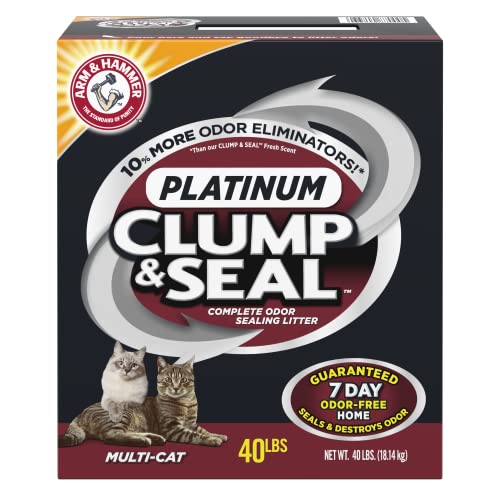
1. Best Overall: Arm & Hammer Clump and Seal Platinum Cat Litter
A great, dust free cat litter that forms rock hard clumps for easy scooping.
You may already be a fan of Arm & Hammer cat litter’s odor control using baking soda, and now you can be a fan of a dust-free version. Arm & Hammer Clump and Seal Platinum cat litter is made from plant material instead of clay, so it is dust-free.
However, this plant material is still clingy and forms a tight clump around all liquid and solid waste, making it easy to scoop and remove. With their tried and true baking soda formulation, odors may be reduced as well. This litter is backed by a guarantee that your house will smell less like a litter box in seven days or your money back.
In addition to using plant materials for less dust, there is also moisture activated Micro-Granules that further seal the clumps together so that your cat tracks less litter around the house.
Even with the guarantee, some cat parents still have trouble with litter box odor. Some had trouble with the scent of the litter itself being overpowering. Either way, with the better clumping technology of this litter, frequent cleanings are made easier, so smell can be less of an issue.
Pros
Zero dust
Plant instead of clay-based
Less tracking
Cons
Still some odor issues
Scented version may be overpowering
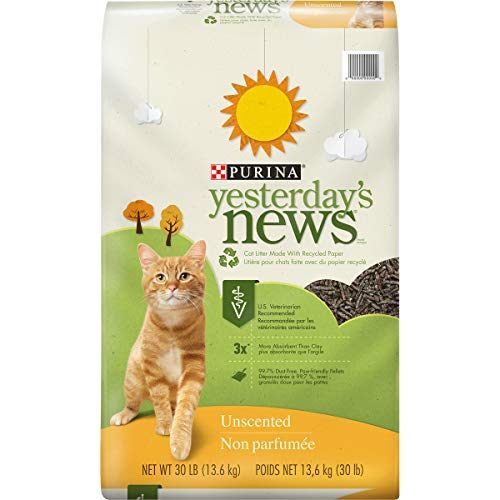
2. Best Eco-Friendly Option: Purina Yesterday’s News Non Clumping Paper Cat Litter
Made with recycled paper that is highly absorbent.
Good choice for those who prefer full litter box changes instead of scooping.
Yesterday’s News from Purina is an eco-friendly twist on traditional cat litter. This cat litter is made from recycled newspaper compressed into pellets, so there’s no chance for dust. These pellets absorb liquids and swell so that they are easier to scoop. It surrounds and sticks to solid waste as well. The size of the pellets also makes it less likely to stick between your cat’s toes and be tracked around the house.
This cat litter is so free from dust that it is often prescribed for use following a declawing procedure or any other injury to the toes and paws. The pellets are gentle and clean, helping those new surgery sites to heal. This cat litter can also be used in small quantities, allowing for a full litter box dump and cleaning each day to help reduce odor.
While Yesterday’s News is highly absorbent of waste, it doesn’t do much for absorbing odor. It does come in scented versions that will help mask those litter box odors, but we all know what that’s like. Because of this, more frequent litter box cleanings may be required.
Pros
Eco-friendly
Virtually dust-free
Easy to clean
Cons
No odor control
Doesn’t clump
3. Flushable Option: World’s Best Multi-Cat Clumping Cat Litter
Best choice for those looking for a natural (whole-kernel corn) litter without any harmful chemicals or artificial perfumes.
For a natural clumping cat litter that is virtually dust-free, look into World’s Best Multi-Cat Clumping Cat Litter. This product is made from corn, so it’s sustainable and naturally absorbent without the clay dust that most clumping cat litters contain. This also means it’s flushable, so no more garbage bags full of clumped litter to haul to the dumpster. In the long run, however, it’s probably better to dispose of it in the trash than your toilet.
This litter clumps quickly, meaning it traps odors fast as well. The clumps are tight and easy to scoop, locking the odor in with it, and it doesn’t leave that cement-like goo stuck to the bottom of your litter pan. This is excellent news if you have multiple cats and litter boxes to take care of.
A downside of this cat litter is that it is made of corn, so cats with corn allergies could be affected. While corn allergies are relatively uncommon, you might not want to take a chance if you have a sensitive kitty. Also, coming from an organic source means that it can attract bugs, and some cat parents have opened their new bags of World’s Best Cat Litter to find it “littered” with bugs.
Pros
Natural
Flushable
Clumps tightly with odor control
Cons
Not for cats with corn allergies
May attract bugs
4. Best Budget-Friendly Option: Dr. Elsey’s Premium Clumping Cat Litter
Good choice for odor control and easy to scoop clumps.
This clay litter is almost completely dust-free. The difference between Dr. Elsey’s Ultra Premium Clumping Cat Litter and other clay clumping cat litters is it uses heavier weight clay particles instead of the small, dust promoting variety. This helps to create a tight clump without creating a dust cloud every time it’s touched.
The particle size prevents that “sticky mess” we’re all used to with clumping clay litters, so it is less easily tracked around the house. Even though it’s less sticky, it does its job well. This litter will still form a tight clump that is easy to scoop and helps lock in odors. This cat litter is also free from any fragrances, dyes, and other chemicals, so it works great for cats with allergies or other sensitivities. It’s also a good litter if you’re on a budget.
This litter may track less mess, but it tends to form that clingy layer at the bottom of the litter box. This may be remedied by keeping the litter a little deeper so that it has time to clump before reaching the bottom of the pan. It still might take a little extra elbow grease to clean, though.
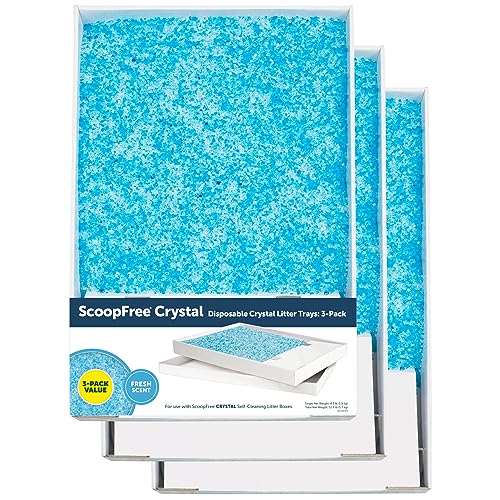
The best choice for convenience when used together with the Self Cleaning Litter Box.
Another option for dust-free litters are ones that use crystals the like this PetSafe Crystal Cat Litter. This litter is made from moisture and odor absorbent crystals-not clay, wood, or newspaper. These crystals are large enough that they won’t stick between kitty toes to be tracked around and are virtually dust-free. These crystals may be large, but they are lightweight, making a large bag easier to manage than other cat litters.
The crystals in PetSafe Scoop Free are so absorbent that they will lock in moisture from liquid waste and even dry out solid waste to make it easier to scoop. This absorbency goes for odors as well, and it can effectively lock in smells even in multi-cat households.
This cat litter is designed to be used with the ScoopFree Self Cleaning Litter Box, but regular litter boxes would work too. However, the crystals’ longevity seems to be shorter if it’s not used with the self-cleaning box. This means that the odor absorbency might not last if used with the self-cleaning litter box. Also, since they are crystals, they may have some rough edges that may be tough for older kitties or those with sensitive paws to use.
Pros
Highly absorbent
Non-tracking
Lightweight
Cons
More expensive
Best if used with a specific litter box
Not for sensitive feet
Dust-Free Cat Litter Buying Guide
Cats in the wild just use dirt or sand, so how could there be so many choices out there when it comes to cat litter? It may be hard to understand how something so seemingly simple can have so many different options. When it comes to dust-free cat litters, the benefits should speak for themselves. Here are things you should be aware of when looking for the best dust-free litter for you and your cat.
What is Dust Free Cat Litter?
Most traditional cat litters use silica clay. It’s very absorbent, but being a product made from dirt, it comes with its fair share of dust. For a cat litter to be dust-free, it is usually made from another substrate or has additional ingredients to bind up that dust. With this in mind, dust-free cat litters can be made from wood shavings, newspaper, walnut shells, corn, or clay, to name a few. They may have a different texture than traditional clay litters and be clumping or non-clumping. They will also have varying degrees of odor control.
Why Choose a Dust Free Cat Litter?
This may seem obvious-no dust, right? This means no more cleaning the area every time you fill the litter box. Also, less dust inside the litter box means fewer particles sticking to your cat’s feet to be tracked around the house. Less dust means a cleaner home, not just a cleaner litter box.
Dust-free isn’t just about cleanliness. It also can mean less respiratory irritation. The silica dust from normal clay litters can irritate your cat’s airways, causing respiratory issues like asthma. Some cats may be so sensitive to this dust that they cough, sneeze, or wheeze after every litter box use, causing further irritation.
While this isn’t an issue for every cat, those who have a respiratory illness or respiratory condition can be affected greatly. That goes for you too. It’s hard not to breathe in some of that dust cloud when you fill or scoop the litter box, and those dust particles can cause irritation or inflammation in your lungs as well.
How to Choose the Best Dust Free Cat Litter
There’s more than one option when it comes to dust-free cat litter, so it’s not always easy to pick the best one. Here are some features that you can choose from.
Clumping vs. Non-Clumping
Depending on the dust-free substrate, it may or may not naturally clump. Some will have additional ingredients to help them stick together around liquid or solid waste. They will also vary on the time that it takes to clump. Some will clump almost instantly, while others take a few seconds. The amount of time it takes to clump will also affect the odor control and whether you’ll have that sludge at the bottom of the litter box or not.
If you like to scoop, go for a clumping litter. If you would rather dump the whole box at once, use a non-clumping version.
Odor Control
Different litter substrates are going to have different odor control abilities. Some won’t have any odor control and will frequently need box cleaning, while others will have added ingredients to lock-in that odor. If you’re a frequent scooper, you may get by with less odor control. If you have multiple cats or don’t want to clean the litter box every day, look for an odor control option.
Scented or Unscented
Scented cat litters usually don’t get rid of odors, but instead, mask them with something else. Some of these scents are subtle, while others may be a little strong.
Texture
Most clay litters have similar textures, but when you get to using other substrates, those textures can be varied. Some are pelleted, while others may vary in shape. If you have a picky kitty, you will need to pay attention to these textures. The texture will also play a role in whether the litter tracks outside of the litter box. Generally speaking, the bigger the litter particles, the less tracking, but also the less willing your cat will be to using it.
Cost and Convenience
Cat litters can be expensive. Buying the most expensive litter doesn’t mean it’s the best for you and your cat. You’ll want to look at your cat’s preferences in textures and scents and choose something that will work for both of you. In most cases, this will take some experimentation to figure out.
Conclusion
Dust-free cat litter may be an excellent choice for a cleaner home and a must if your cat has respiratory issues. These cat litters come from a variety of sources, so to start with, find one that’s similar to your current litter to keep your cat interested. You can then experiment with others from there.
Dr. Chyrle Bonk has been practicing veterinary medicine since 2010. She lives in Idaho with her husband and two sons, where they spend their free time exploring the great outdoors that is right in their backyard.
If traveling with your cat falls under the category of “worst idea imaginable,” it might be time to invest in a new cat carrier.
Now, nothing will have your cat jumping eagerly at the door, begging for a car ride, but choosing one of the best cat carriers for nervous cats can make any cat-accompanied trip much more enjoyable.
Don’t believe me? Reading this article might change your mind!
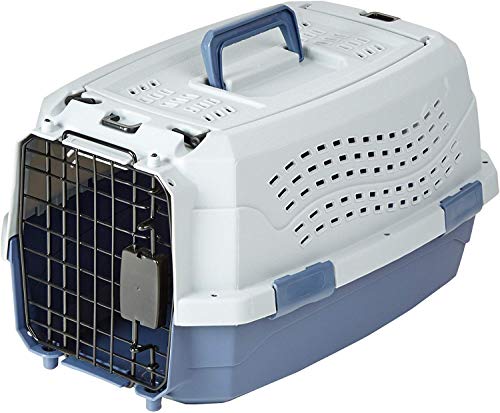
1. Best Overall for Nervous Cats: Amazon Basics Two Door Top Load Hard Sided Pet Travel Carrier
Simple, hard-sided carrier that is durable and easy to assemble.
Two-doors, with a top entry option to making loading easier.
This cat carrier from Amazon Basics is just that-basic. Which when it comes to nervous cats, sometimes the simpler things are, the better.
This hard-sided carrier is meant to stand up to scratchers and clawers, and the front metal door will keep errant paws from causing trouble.
This carrier comes in two sizes, a 19″ and a 23″ length so that you can accommodate any size kitty. The larger carrier is convenient for placing a comfortable bed, while the smaller size may help your fraidy cat feel more confined and secure.
For cats that are more nervous with loading in a carrier, the Amazon Basics features two doors, one at the front and one on top so that you and your cat can choose which one is more comfortable.
The top door also opens to either the left or the right, again adding convenience. This carrier comes apart in the middle so that the top can be lifted off in case you have a nervous cat that doesn’t want to come out once they go in.
But don’t worry, it secures with latches and screws when you don’t want it to come apart.
Always be sure to securely latch the top door as it also serves as the carrying handle and can come open when you lift it if you’re not careful. This is especially a problem when carrying multiple kitties or cats on the heavier side.
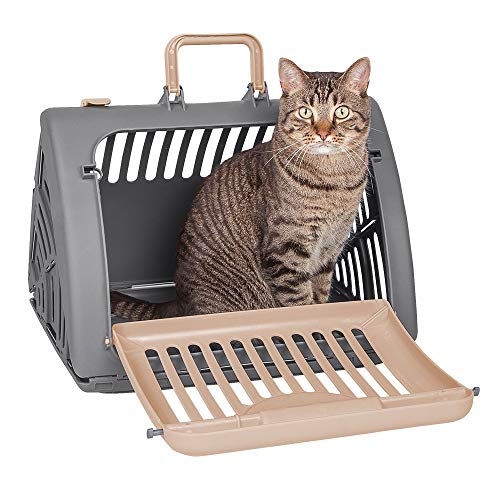
Durable, easy to clean, and can fold down for easier storage.
Can accommodate pets up to 25 pounds.
This unique carrier from SportPet features a triangular shape, rather than the more common rectangle. This shape is what makes a hard-sided cat carrier foldable for more convenient storage.
The shape also makes it easier to fit on the floor of your car. While it might seem like a triangular carrier wouldn’t be as comfortable for your kitty, this one is large enough for a smaller cat to stand or sit up as well as sprawl out. This carrier can hold cats up to 25 pounds!
The SportPet Designs Foldable Cat Carrier only has one door, but that door takes up nearly all of the carrier’s side, making it large enough to load even nervous cats conveniently. There is also plenty of holes for ventilation or for your cat to see out. The plastic sides are durable to stand up to any rough and tumble as well as persistent claws.
Since this carrier can fold for storage, always be sure that the sides and door are secured before trusting your kitty inside. A cat escape issue can occur if this carrier isn’t correctly latched when reassembled.
Pros
Easy storage
Unique shape for more convenient stowing
Durable plastic for easy cleanup
Cons
Needs reassembling if folded
Cats can escape if walls aren’t properly latched
3. Most Versatile: PetLuv Happy Cat Premium Cat Carrier
Optimal ventilation cat carrier with four access panels and adjustable shoulder straps for more comfortable transport.
Adjustable seatbelt loops, locking zippers, and reinforced seams makes it a good carrier for traveling by car.”]
For cats whose nervousness makes them difficult to load, the PetLuv Happy Cat Premium Carrier offers four access options. All four sides double as doors should you need them to coax your nervous kitty in or out.
These four doors are made of rubber mesh so that this carrier feels more open for those claustrophobic or curious felines. It also has roll-down solid curtains should your cat want some privacy.
This is a soft-sided carrier, making it convenient to fold and store, as well as comfortable to carry. It comes in many different sizes, some even with wheels. The different size options will allow you to outfit your kitty with a comfortable bed to make them feel more at home.
The doors open with zippers that can be locked to block any clever escape attempts. It also comes with seatbelt loops to securely fasten your cat into any car seat to prevent rolling and tumbling while on the road.
Since this is a soft-sided carrier, it’s not meant for destructive travelers. Kitties on an escape mission should be able to tear through the rubber mesh and get away. It works best for kitties who are more afraid of the entry than actually being in the carrier.
Side pocket is convenient to hold small items like snacks, medication, waste bags, etc.
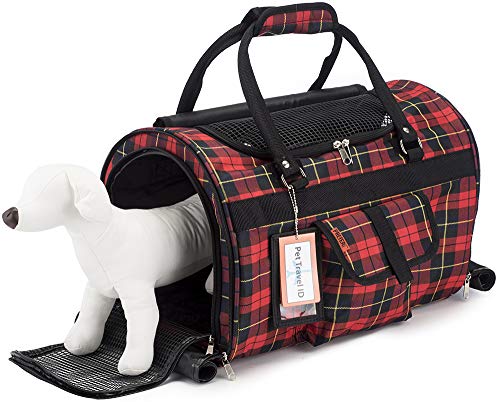
If comfort, or lack thereof, is the reason for your cat’s nervousness about travel, look at the Prefer Pets Hideaway Duffel. This duffel is easy to carry, provides plenty of seclusion, and even blocks some noise.
The mesh top and sides allow for extra ventilation or can be covered with lined, roll-down curtains to block out the world.
This carrier has three doors, one at the top and one on each end, to provide quick loading and unloading access. There is a harness clip inside should you want the added security of fastening your kitty inside of the carrier.
There is also a large storage pocket located on the outside of this carrier to store treats, catnip, or other travel necessities to keep your kitty calm.
This is a soft-sided carrier, making it a risk for destructive cats. It also doesn’t have zipper locks to keep the doors securely fastened, and some persistent cats can push through the doors by unzipping the zippers. You can place your own lock on the zippers, though. It just doesn’t come equipped with them.
Heavy duty plastic shell makes this carrier very sturdy.
Carrier meets most airline cargo specifications for easy and safe travel, but you should always confirm this with individual airlines.
Petmate Sky Kennels are designed for airline travel, so this one should solve your durability issues if your cat’s escape plan includes digging themselves to freedom.
It also features a metal door that serves as structural reinforcement, which may be necessary when traveling by plane. This door is large, making the loading game a bit less tricky.
This cat carrier also has metal screens on the sides that serve as vents or windows for those curious travelers. However, there is still ample enough room for those cats that prefer to hide behind the solid parts of the walls.
The Petmate Sky Kennel comes in a variety of sizes to get the perfect fit for whatever size your cat, or cats, may be. Larger sizes may be more comfortable and easier to load your cat into. However, smaller sizes may be easier to carry around.
When choosing a size, the measurements listed on the chart are for the outside dimensions. Keep in mind that the inside dimensions will be slightly smaller, so when in doubt, go for the bigger one. The larger sizes tend to be heavy as well, so be careful when using the carrying handle as it can break when lifting heavier kitties.
Pros
Ready for airline travel
Many sizes to choose from
Sturdy and durable
Cons
Not as comfortable as other carriers
More expensive than other carriers
Best Cat Carrier for Nervous Cats Buying Guide
If you have a nervous kitty, having a comfortable and secure cat carrier is a must. When choosing that perfect carrier, there are several things to consider.
What Makes Cats Nervous When Traveling?
To find the best carrier for your nervous cat, you first need to understand what makes them nervous. For some kitties, their nervousness comes from being pushed into a cramped, dark, plastic box.
And who could blame them?
For kitties that dread the loading procedure, look for a cat carrier with multiple door options, especially a top door.
This allows you to set your cat down into the carrier rather than trying to push them in. Having larger and more ventilation “windows” may also help the cat carrier appear more open and shed some light on the interior, easing some cat’s apprehension.
For other cats, the nervousness isn’t in the loading; it’s in confinement. Maybe they don’t like the rough and tumble of being jostled around. Or they don’t appreciate four walls closing in on them.
This may cause them to scratch, claw, wail, or look for another means of escape. For kitties that scratch or claw, look into a hard-sided cat carrier. While they might not be as plush and comfy, they’re more durable and able to withstand some nervous slashing.
If, instead, your kitty seeks more comfort, look into a soft-sided carrier that can easily be toted. Adding a soft bed and windows/openings that can open or close (depending on whether your cat wants to look out or would prefer to be unseen), is an excellent option for comfort.
The Safety of a Cat Carrier for Nervous Cats
Your next big concern when choosing a cat carrier for your bundle of feline nerves is safety.
Safety is always a priority when traveling with your furry friend, but especially so with nervous cats. They are more likely to devise and execute escape plans. If your cat is a scratcher, you will want to get something that can withstand cat claws.
You may also want something with lockable doors. Whether they close with zippers or springs and pins, the ability to lock the doors will prove invaluable if you have a feline Houdini. You’d be surprised what a persistent kitty can do.
Many can push zippers open and pop the metal spring, especially if it isn’t closed correctly. Some cat carriers may come with locks or secondary buckles already in place, while others may provide the ability without the actual lock. Whichever the case, always backup the closing device of your cat carrier.
Whether you’re planning to fly or spending long periods in a car, the durability and sturdiness of a cat carrier may become important.
There may be a lot of jostling, packing, and stacking when you travel by airplane, so make sure your carrier can hold up. You also may want to make sure it has some stability if in a car accident.
If you choose a soft cat carrier, go with one that can be buckled in with a seatbelt. You may also choose a carrier that allows your cat’s harness to be fastened to the inside. This will prevent your kitty from busting out whether they can get the door open or not.
Other Features of Cat Carriers for Nervous Cats
Once you have your safety and loading capabilities chosen, it’s time to pick out the perks. After all, if you’re more comfortable when traveling, your cat will be as well.
You need to pick a cat carrier that will be big enough to be comfortable for your cat, but it can be awkward and heavy for you to carry. If that’s the case, consider a cat carrier with wheels. Or for soft-sided cat carriers, one with a shoulder strap. The more conveniently and comfortably you can carry your cat, the more at ease they will be.
You can also look into a cat carrier with pockets for storage of necessities like treats and leashes. Finally, look at your storage situation when the carrier’s not in use. If you’re worried about where you’ll store it for the rest of the year, think about a model that folds or can be taken apart easily.
Conclusion
Traveling with any cat is usually no picnic, but traveling with a nervous cat can be downright unpleasant. Choosing the best carrier for your nervous cat buddy is essential. It can help make traveling more comfortable and safer for your cat and make the loading process much easier for you.
Dr. Chyrle Bonk has been practicing veterinary medicine since 2010. She lives in Idaho with her husband and two sons, where they spend their free time exploring the great outdoors that is right in their backyard.