Chyrle Bonk, DVM

Dr. Chyrle Bonk has been practicing veterinary medicine since 2010. She lives in Idaho with her husband and two sons, where they spend their free time exploring the great outdoors that is right in their backyard.

The Best Cat Self Groomers & Buying Guide

A grey and white cat with some black stripes lying down holding and biting a pink brush.

Cats love to look their best, and as you’ve probably have realized, it doesn’t come without effort. It sometimes seems that they spend nearly every minute of their waking hours grooming themselves. And sometimes they still need a little help from you and a brush. If you want to help your kitty continue to look good but want to save them and yourself some time, look into getting one of the best cat self-groomers to boost their grooming routine.

Best Overall Self Groomer: Petstages Scratch and Groom

Petstages Scratch & Groom Corrugated Cat Scratch Pad With Catnip
Self-groomer and scratcher that helps reducing fur shedding and hairballs.
Scratch pad includes dried catnip to further entice your cats.

For a 2-in-1 product with a simple design, it’s hard to beat the Petstages Scratch and Groom. It features an arched brush mounted on a cardboard scratching pad. The brush provides the perfect location for your cat to self-groom or get a little self-massage. The cardboard flooring is perfect for working out those claws and their natural scratching behavior without sacrificing your carpet.

Another great thing about this product is how lightweight and easily mobile it is. It can blend into any décor and be moved throughout the house. Your kitty will like the do-it-yourself ability of this product. They can get a back scratch whenever they want! During those heavy shedding times of the year, you should find yourself wallowing in less and less cat hair as your cat can get rid of it at their leisure. 

The cardboard bottom is also infused with catnip to entice your kitty to use it.

Since the bottom scratch pad is made of cardboard, it will wear out. If your cat scratches especially hard with their claws, it may leave bits of cardboard pieces that can scatter around your house. If kitty is a vigorous clawer, they can end up moving or tipping the whole product over.

Pros

  • Inexpensive
  • Self-groomer and scratcher in one
  • Catnip infused to attract use

Cons

  • Will need to be replaced
  • May leave bits of cardboard around your house
  • Easily tipped over or moved

Best Combo Product: Happi N Pets Premium Cat Arch

Happi N Pets Premium Cat Arch Self Groomer Cat Massager
3-in-1 multipurpose designed cat grooming brush & massager.
Luxury cork surface and high end plush surrounding the scratching pad for extra comfort.

The Happi N Pets Premium Cat Arch is more than just a self-grooming brush. It also includes a cork scratching pad and a catnip-filled mouse toy mounted on a spring to keep your cat entertained. 

The self-grooming arch’s bristles are longer than previous versions of the product, making it ideal for cats of all hair lengths. The cork scratching pad base offers a different texture than most scratching pads for kitties with picky scratching tendencies, and the mouse toy provides mental and physical stimulation for when you can’t be there.

This product’s base is weighted and lined with plush fabric to make it attractive, comfortable, and sturdier. Cats can play, scratch, and groom all day with less chance of tipping it over or chasing it around the house. The longer bristles provide more grooming power to get through even thick or long hair. This can help to catch loose hairs and keep them from floating around your house.

A possible issue with this product is that the brushed arch is relatively small, making it difficult for cats to walk through it. While small cats and kittens may be fine, larger cats might avoid using it since they will have to crouch or crawl through to get the full effect.

Pros

  • Combo product featuring brush, scratching pad, and toy
  • Weighted bottom to prevent tipping over
  • Longer bristles to accommodate all hair types

Cons

  • Small arch
  • Some cats might not like cork for scratching

Best Self Grooming Vertical Brush: Amazon Basics Cat Scratching Post With Toy

AmazonBasics Cat Scratching Post with Toy
Durable, scratch-friendly design allows your pet to entertain themselves for hours on end, keeping their claws busy and their mind content.
Made of natural jute rope with a carpeted MDF wood base, for long-lasting quality and durability.

This product’s name implies that it only has a scratching post, but it also features a mounted vertical brush to aid your cat with self-grooming. Included on the base is a mounted vertical scratching post with a toy attached at the top, making this an all-in-one entertainment station for your kitty.

This product is durable, featuring a jute rope covered scratching post, carpeted base, and a stiff-bristled grooming brush that helps remove shed hair, prevent mats, and stimulate the skin through massage. Your kitty can rub or roll against the brush, reaching all groom-able parts of their body. 

This product works best with kittens or smaller cats. Since it is only about 21 inches tall, it might not be a favorite of those long-bodied types that like to get a full stretch when scratching. Taller cats may have trouble using the self-grooming brush since it will be difficult to reach the higher parts of their sides and back without laying down. This product can also be easily flipped over, especially if your cat is an aggressive scratcher or groomer.

Pros

  • Includes scratching post, toy, and vertical self-grooming brush
  • Durable materials
  • Helps to remove hair and stimulate the skin

Cons

  • Easily tipped over
  • Only for smaller cats

Most Versatile Product: IMISNO Cat Self Groomer With Cat Nip Pouch
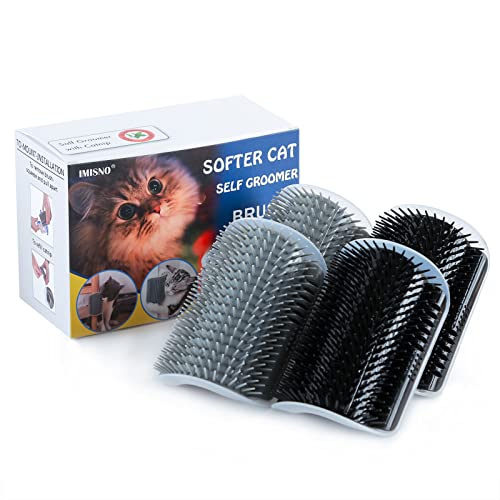
IMISNO Cat Self Groomer with Catnip Pouch
Made of eco-friendly softer plastic, so it is safe and won't hurt your cat's skin and it easy to install on walls.
Can be used as an self-groomer or as a handheld brush.

For a wall-mounted self-groomer with plenty of versatility, look into the IMISNO Cat Self Groomer. Not only can you mount this brush on a corner or flat surface, but you can also use it as a hand-held brush to groom your kitty. Since this product comes in a four-pack, consider doing all of the above! There is also an inner compartment for putting catnip if your cat needs a little extra nudge to get used to this brush.

The IMISNO Cat Self Groomer can be easily mounted on walls or cabinets with screws or adhesive strips. If your cat prefers a flatter surface, it can even be mounted on the floor. The plastic bristles will help stimulate the skin while catching loose hair and preventing mats and tangles. Your kitty will love how this brush promotes their natural rubbing behavior, and they may appreciate the little catnip enticement.

Some kitties might find the bristles of this brush too hard, especially if they are aggressive groomers or rubbers. The nice part about this version is that your kitty can adjust the intensity they use if the bristles seem too stiff.

Pros

  • Can be mounted on flat or curved surfaces
  • Easily cleaned
  • Inner compartment for catnip

Cons

  • Bristles may be too stiff
  • Can cause damage to walls

Best Wall Mounted Product: TTSAM Cat Corner Self Groomer
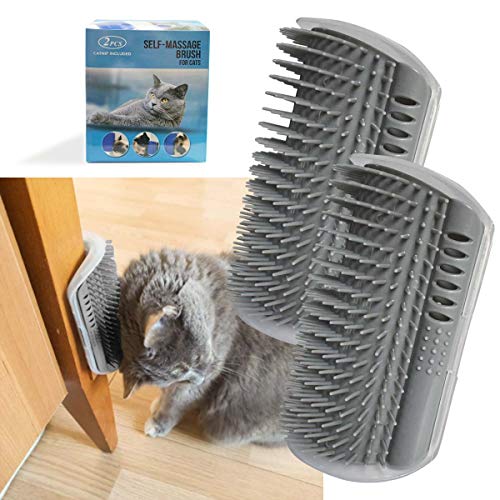
TTSAM Cat Corner self Groomer
Made of upgraded version 3.0 softer ABS plastic base and softer plastic bristles, to ensure gentle massaging and grooming without painful remove fur or scratch the cat's skin.
Easy to install, disassemble, and to clean.

If you want to promote your cat’s natural tendencies to rub on things and get a little grooming at the same time, look at this wall mounted self-groomer. The TTSAM Cat Corner Self Groomer attaches around the corners of walls, cabinets, or even table legs to provide a surface for your cat to rub and self-massage while collecting hair and preventing tangles. 

This self-grooming brush is easily mounted using optional screws or adhesive strips. It can be mounted at any height to ensure that your cat is comfortable and wants to use it. 

The brush can also be removed for easy cleaning in soapy water. The soft plastic bristles won’t cause any damage to your cat yet are sturdy enough to massage and stimulate the skin while collecting loose hair and preventing mats.

Before buying this product, make sure that you have the proper surface for it. Since it wraps around for two-sided use, you’ll need a corner that sticks out rather than goes in. You’ll also want to make sure it won’t cause any damage if your cat is aggressive and pulls it off of the wall.

Pros

  • Versatile brush that promotes a natural cat behavior
  • Collects loose hair
  • Easily cleaned and assembled

Cons

  • May cause damage to the wall or cabinet
  • Cats may need some enticing or training to use it

Cat Self Groomer Buying Guide

A close-up of a brush and its bristles with the text, "Cat Self-Groomer Buying Guide" written on it.

Whether you’re looking at a self-groomer for your cat to reduce the amount of hair around your home or your kitty just wants a little stimulation, make sure you buy the best product by following some of these tips.

Why Does My Cat Need a Self-Groomer?

If cats are such professionals at keeping themselves clean and presentable, you may be wondering why they would need a self-groomer. The answer is, they don’t need one, but they might love having one around. Self-groomers consist of some version of a brush mounted to a platform or wall that allows your cat to rub against it at their leisure. It works to both help remove loose, shed hair and to massage and stimulate the skin. Frequent brushing also helps prevent tangles and mats and distribute natural skin oils for healthy softness and shine.

A cat’s tongue may be good at removing dirt and debris and preventing tangles, but a brush can really help get the job done. Brushing is essential for those cats that don’t groom as they should due to illness or age. While brushing your kitty is also a great way to bond and spend time with them, it’s often not feasible for us to be with them all day. A self-groomer is an excellent substitute for when you want your kitty to have the benefits of brushing but just don’t have the time.

How to Choose a Self-Groomer For Your Cat

As with all cat products, there is a wide variety of self-groomers out there. Choosing the best one for your cat’s needs requires knowing your cat’s preferences and natural behaviors.

  1. Arch Style Self-Groomers: For those kitties that love to rub against your leg or crawl under blankets, an arch type brush may be best. These self-groomers features a firm bristled brush mounted in an arch over a base that often doubles as a scratching pad or play area. This brush allows your kitty to walk or crawl through, getting the full effect of a nice back rub or massage while collecting loose hair, combing through mats, and spreading skin oils.
  2. Wall-Mounted Self-Groomers: Most wall-mounted self-grooming brushes are smaller and work best for cats that like to face or body rub along a vertical surface. They can be mounted at a comfortable height and promote a cat’s natural behavior for “head butting.” These brushes can also work well at collecting loose hair, massaging, and can be placed nearly anywhere without being another piece of cat furniture that’s in the way.
  3. Vertical Brush Self-Groomers: Another style of self-groomer is a vertically mounted brush or post. These are often found on a platform and allow your cat the same benefits of being able to headbutt, walk by, or roll along on their belly to reach the brush’s bristles. 
  4. Combo Products: If you’re short on space or don’t want another cat product in your home, look into a combo self-groomer. These can have the self-grooming brush, in the form of an arch or vertical brush, with an attached scratching post or pad, toy, hammock, or bed. They are often carpeted, weighted, and durable to make them safe and comfortable.

How Do I Train My Cat to Use a Self-Groomer?

Most kitties will take to a self-groomer instinctively. They have the urge to rub against things, especially if they get a pleasing massage in return. But some cats may have a harder time coming around. For those that are more difficult to convince, try these tips:

  1. Allow for Exploration: Cats are curious by nature, and most will willingly come to inspect a new piece of equipment. Leave the new self-groomer out where they can see it and use it without any pressure or observation.
  2. Add in Some Play: Don’t hesitate to play with your cat and the self-groomer. Show them that it isn’t scary and is something they can enjoy.
  3. Demonstrate: If your kitty just doesn’t understand, show them how it works. Help them to rub against it or brush them near the product. Once your cat is comfortable with this, brush them against the groomer gently.
  4. Catnip: If all else fails, rub some catnip on it. Catnip is a natural cat attractant and can be used on just about any cat product to make it more enticing. If your self-groomer doesn’t feature a catnip compartment, you can rub some on the bristles or base to get your cat interested.

Final Thoughts

Self-groomers for cats can be great products that help promote the health of your cat’s skin and haircoat. They can replace you having to brush them when you can’t be there. Self-groomers can also provide your cat with entertainment and independence, especially if grooming has become difficult for them to do themselves. Choosing the right self-groomer for your cat will depend on their natural habits, your available space, and if you want any additional bells and whistles. 

Can Cats Eat Beans? Are They Healthy?

A white, heart-shaped bowl filled with different types of beans, ranging from white, orange, brown, green, and yellow beans.

A source of protein, fiber, and other nutrients, cats can eat beans. However, moderation is key, as with all human foods, and beans shouldn’t make up a significant portion of their diet. So, what are some other benefits of beans, and are all beans the same when it comes to your cat’s tummy? Let’s find out.

The Benefits of Beans for Cats

A circular piece of art made from brown beans, with some black beans inside of it forming the image of two black cats.

With beans, the list of benefits is long. As already stated, beans are excellent sources of protein. Cats are obligate carnivores meaning that they need protein, and lots of it, in their diet as a source of energy and muscle maintenance and growth. 

Add to that high protein a high fiber content, vitamins, minerals, and even antioxidants. Fiber is important for digestive regulation and function. It also helps keep a kitty feeling full for longer so that they aren’t constantly rubbing against your legs, begging for food. High fiber in the diet is a definite plus if you’re trying to convince your cat to lose a couple of pounds.

Vitamins and minerals are needed in nearly every bodily function, and antioxidants help protect and prevent oxidative damage to cells. This is something that can occur to any cell at any time and happens as your cat ages. A diet high in antioxidants can help deter diseases such as cognitive dysfunction and kidney disease.

Beans are also low in fat and calories, something that most of our housecats don’t need. They are even less expensive than their high-protein counterparts-meat, another great benefit if you’re on a budget or just looking for a less expensive snack for your feline friend.

Can Beans Be Bad For Cats?

A brownish and white cat leaning against the top of a cushioned chair, looking at the camera with both of its ears down.

Beans have been called a superfood, and they indeed are for humans. But for cats, they’re not so much a superfood as they are a super-snack. Beans are high in protein, but they are incomplete in their amino acid profile, like many other plant-based protein sources. This means that they don’t provide all of the essential amino acids that cats need from their protein. This makes mixing and matching of beans with other protein sources important. Meat is a complete protein and should make up the majority of a cat’s diet.

That high fiber that is touted as a savior for digestive health can be detrimental in high qualities. Fiber is undigestible, which helps bulk up bowel movements to get things moving in constipated kitties or solidify loose stools. 

But on the flip side, it can also draw lots of water into the digestive tract, leading to diarrhea. It can even fill up the stomach, taking up room that more important and necessary nutrients need to inhabit.

Beans are by no means toxic to your cat. However, since your kitty’s digestive system is finely tuned to efficiently digest meat, adding a bunch of beans to their diet can lead to diarrhea, gas, and stomach pain.

How to Feed Beans to Your Cat

A black cat sitting in the lap of a woman, who is holding a silver food bowl for the cat to eat from.

If you’re looking to add a bean bonus to your cat’s snack time, do so wisely. Steer clear of canned beans, refried, or baked beans as all can be high in sodium. Baked and refried beans usually contain lots of fat and sugars that negate the positive effects, or seasonings, like onion and garlic, that can be toxic. 

Instead, feed your cat beans that have been washed, soaked, and cooked without seasonings. Raw beans aren’t very appetizing, and they can contain harmful bacteria on their skins and create obstructions in the gut.

Soak beans for a couple of hours and then boil for about 30 minutes or until tender. Serve without other seasonings. Keep the amounts low and infrequent so that these beans don’t replace too much of your cat’s regular diet. 

For kitties on a diet, you can add beans to their regular meals to up the fiber content and decrease the number of calories consumed. Stick to below 10% of their total diet unless directed by your veterinarian.

Is There a Difference Between Different Beans For Cats?

9 silver spoons each filed with a different type of bean, which is in a row on top of a wooden surface.

Kidney, pinto, black, white, green…the list of types of beans are long, but are they are the same? As far as your cat’s concerned, most beans have a similar nutrient profile. This is because your kitty will only be eating a small amount, so that any differences will be minor. 

That being said, darker colored beans tend to be higher in antioxidants, so if you have an older kitty or one with a chronic condition, darker beans, like black and kidney, may be more beneficial.

Chickpeas, or garbanzo beans, are less digestible than other beans, so they should be avoided. Again, seasonings and extra add-ins, like sugar, should also not be a part of your cat’s bean snack.

Final Thoughts

If your kitty is curious about beans, feel free to give them some. Just make sure that you give them beans in their purest, cooked form in small amounts and only sporadically. These (infrequent) little treats can provide your cat with some additional protein, fiber, vitamins, minerals, as well as a little antioxidant punch. 

The Best Cat Shampoos: advice from a veterinarian

A light and darker grey cat in the bath with soapsuds all over its body and on top of its head. An arm can be seen in the background washing the cat.

We’ve all heard that cats hate water. While it’s true that most felines would avoid a plunge in a lake or running through the sprinkler, they can learn to tolerate an occasional bath. 

To get your kitty to enjoy baths more, it helps to have the right tools. Among the most important is using a proper shampoo. There are so many brands available on the market that knowing which one to choose can be challenging. To help you find the perfect product for your cat, here is a list of the best cat shampoos you can buy, along with a buyer’s guide with essential information.  

1. Best Overall Shampoo: Burt’s Bees Hypoallergenic Shampoo With Shea Butter and Honey

Burt's Bees Hypoallergenic Shampoo
Self-
Made with high-quality ingredients and does not use any fragrances, sulfates, colorants, and harsh chemicals.

If you love Burt’s Bees products for yourself, chances are you’ll love their pet care line as well. This hypoallergenic shampoo is made from all-natural ingredients, like shea butter for moisturizing and honey to add a little extra shine to your cat’s haircoat. 

There are no harsh chemicals, including fragrances and dyes, that can be toxic or cause harm to your cat’s skin. The formula is pH balanced to be gentle yet cleansing for all skin types, even young kittens and older cats.

Even though Burt’s Bees Shampoo is made with natural, non-toxic ingredients, it can still get the job done, leaving your cat’s hair soft, shiny, and free from mats. It will also leave their skin moisturized without irritation. This product isn’t scented, so you won’t have to worry about being overwhelmed by a strong perfumey fragrance.

On the other hand, if you’re looking for something with a fresh scent, you won’t get it with this product. It also doesn’t produce a lot of lather, making it easy to use too much. This also makes it harder to tell if you’ve completely rinsed the product out of your cat’s fur.

Pros

  • All-natural ingredients
  • Includes shea butter to moisturize skin and hair
  • Includes honey for some extra shine

Cons

  • Doesn’t lather well
  • No added fragrance 

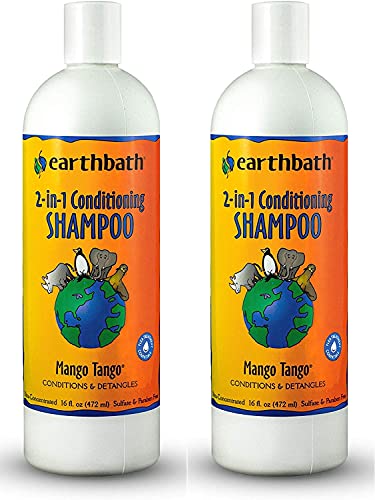
2. Best Detangling Shampoo: Earth Bath Mango Tango 2-in-1 Pet Conditioning Shampoo

Earthbath Mango Tango 2-in-1 Pet Conditioning Shampoo
Does not contain any soap, gluten, DEA, parabens, synthetic dyes, sulfates, or phthalates, and is animal cruelty free.
Safe to use on all animals over 6 weeks old.

Another all-natural product from Earth Bath is their Mango Tango 2 in 1 Conditioning Shampoo. This is a good choice for long-haired cats or those prone to tangles and mats. The gentle cleansing and conditioning leaves hair shiny and smooth to prevent and help remove nasty snarls and knots. It’s also free from harsh chemicals, like parabens and sulfates, so that it won’t over-dry your kitty’s skin.

The combination of shampoo and conditioner in this product will cut down on a step in the bathing process, getting your kitty out of the tub sooner while still leaving their hair and skin soft and moisturized. When used regularly, this product can help reduce the number of mats and tangles in your cat’s haircoat, especially when combined with regular brushing.

The mango tango in this product’s name is due to the fragrance, so if you’re not into strong scents on your kitty, this product isn’t for you. Not only can that added fragrance be irritating to your nose, but it can also be irritating to cats with sensitive skin, causing rashes. Use with caution in kitties with previous skin sensitivities.

Pros

  • All-natural ingredients
  • Helps to detangle and prevent mats and snarls
  • Gentle and conditioning

Cons

  • Scent can be overwhelming
  • May cause irritation in cats with sensitive skin

3. Best for Shampoo for Sensitive Skin: Pro Pet Works All Natural & Organic Oatmeal Shampoo + Conditioner-

Pro Pet Works All Natural & Organic Oatmeal Shampoo + Conditioner
Hypoallergenic soap-free blend for pets with allergies & sensitive skin.
Does not contain any soap, detergent, sulfate, alcohol, or parabens & is cruelty free.

This product, formulated for both dogs and cats, has everything you’ll need to clean your cat’s sensitive skin and haircoat without being over-drying or causing irritation. It is soap, alcohol, detergent, and sulfate-free.  

It does contain ingredients like aloe and almond oil to moisturize and prevent itchy skin. The addition of oatmeal also makes it soothing for kitties that already have a case of the itchies. Along with all of those ingredients, there are vitamins to help boost haircoat health as well.

This product is gentle enough to use frequently without causing excessive dryness, yet can remove dirt, extra oils, and loose hair. It’s 2-in-1 formulation provides a cleanser with a conditioner to cut down on the amount of tub time for your cat without skipping the all-important conditioning step that will leave hair soft, shiny, and tangle-free.

The natural cherry scent in this product can be overwhelming for some people and cat noses alike. It’s also essential to thoroughly rinse this product from the hair and skin as leaving it on can lead to dry skin and irritation.

Pros

  • Gentle and chemical-free for sensitive skin
  • Added conditioner to moisturize
  • Soap, detergent, sulfate, paraben, & alcohol-free

Cons

  • Scent can be overwhelming
  • Thoroughly rinse to prevent over-drying

4. Best Shampoo for Shedding: Top Performance Shed Patrol De-Shedding Shampoo

Top Performance Shed Patrol De-Shedding Dog and Cat Shampoo
Formulated with aloe vera, wheat germ oil, and vitamins to reduce unwanted shedding.
Enhances the shine and revitalizes your pet's coat.

To prevent shedding, a cat shampoo has to be deep conditioning. This prevents breakage and damage. Top Performance Shed Patrol De-Shedding Shampoo does just that, using omega fatty acids found in wheat germ and moisturizing with aloe vera. It also provides essential vitamins to make hair healthier and stronger so that your cat will shed less in between baths. Deep conditioning has the added benefit of leaving your cat’s hair soft, shiny, and smooth.

If your kitty is a heavy shedder, de-shedding shampoos like this one from Top Performance can cut down on the amount of hair left on your couch, carpets, and clothes. Providing deep conditioning will also help improve and moisturize your kitty’s skin, helping to decrease irritation. This product is also sold as a concentrate, meaning that one little bottle will make plenty of shampoo to keep your kitty clean and soft through many, many baths.

Any time you bathe your cat, they’re going to shed more right off the bat because you’re pulling those dead and loose hairs from their haircoat. A de-shedding shampoo is no different, so don’t be surprised if you see more shedding immediately following a bath. 

However, with regular use and grooming, the amount of hair that is shed should decrease over time. Deep conditioning shampoo also isn’t great for kitties that produce a lot of natural skin oils as the extra moisturizing can lead to a greasier haircoat.

Pros

  • Can decrease the amount of shedding between baths
  • Highly moisturizing and conditioning for optimal skin and haircoat health

Cons

  • May cause a greasier haircoat in some cats
  • Will increase shedding immediately following a bath

5. Best Waterless Shampoo: Wahl Pet-Friendly Shampoo

Wahl Pet Friendly Waterless No Rinse Shampoo
No rinsing necessary: Just dry with a towel and brush your pet's coat.
The pH balanced formula is, alcohol, paraben, and PEG-80 free.
Calming formula cleans, conditions, detangles, and moisturizes.

If your kitty just can’t be persuaded to take a traditional bath, or if you’re pressed for time, a waterless shampoo may be the way to go. Waterless shampoos are sprayed on and then patted dry to gently clean and condition without having to put your cat in the sink. 

Wahl Waterless Shampoo is an excellent choice because it is alcohol and paraben-free and pH balanced for all skin types. This gentle formula will clean, condition, detangle, and moisturize without getting your kitty overly wet.

Another bonus is the use of lavender and chamomile as natural, plant-derived calming ingredients. This may help keep those nervous kitties calm and comfortable during the entire bathing process, even though you aren’t immersing them in water like a traditional bath.

The lavender scent can be overpowering, especially since you don’t rinse it out. If you find it too strong, you can consider using less of the product more frequently to achieve the level of cleanliness without the overwhelming smell. Also, since this is a leave-in product, you don’t want to use too much to prevent your kitty from getting sick when self-grooming.

Pros

  • Waterless formula-no bathtubs required!
  • Gentle and effective
  • Can be calming for nervous kitties

Cons

  • The scent may be overwhelming
  • Can make cats sick if they lick it off immediately

Best Cat Shampoos Buying Guide

A young, blonde woman holding and inquisitively looking at a bottle that looks like pet shampoo. She is in a store and in front a shelf with a row of products in front of her.

The grooming supplies market for cats has recently exploded, which may seem weird since cats tend to do most of it themselves. However, even the most fastidious self-groomers can use a little assistance sometimes. For those kitties, having a great shampoo on hand can really help you out.

Why Do Cats Need Baths?

A grey cat with black stripes being washed by someone. It has soapsuds on its head and body.

Before we get into shampoos, it’s important to understand why cats need baths in the first place. After all, most cats spend 90% of their time awake bathing themselves, so why do they need your help? The truth is, the cat tongue is a great bath and comb all in one, but the occasional bath with shampoo can boost your cat’s skin and hair health. Baths are especially important for several reasons.

  1. Detangling: Long-haired cats are especially prone to mats and tangles. Regular baths with a moisturizing shampoo can help prevent and remove tangles and mats. They work by leaving hair slick and smooth, making it harder to form knots.
  2. Shedding: Shedding is a natural process where old hair is replaced with new hair. However, some cats may shed more than others because their hair is dry and brittle, leading to increased breakage and damage. Deep conditioning cat shampoos provide extra moisture to hair to decrease the amount they lose on your clothes and carpet.
  3. Degreasing: The skin produces natural oils that help to moisture the hair to keep it healthy and shiny. Some kitties produce more oils than others, causing a greasy haircoat. Shampooing can gently remove some of that excess oil to promote a shiny coat without the greasy feel.
  4. Cleansing: While it’s less likely than dogs, cats are capable of getting into “stuff.” Sometimes things can leave your cat’s haircoat so dirty that they can’t clean it off themselves. They may even contact things that could be harmful for them to clean off, making a bath from you an important step.
  5. Fleas or Other Parasites: Some flea and other parasite treatments come in the form of a shampoo. These products will help remove the adult fleas and eggs to treat the infestation and prevent it from spreading to other animals.

How to Choose the Best Cat Shampoo

A grey cat with black stripes lying on a pink towel which is on top of a countertop. There are bubbles floating in the air, and one bubble is directly in front of the cat's face. We see that cat's face through this transparent floating bubble.

Once you’ve decided to undertake bathing your cat, it’s important to have a shampoo that will work with you. Understanding your cat’s needs from a shampoo product will help you choose the one that’s right for you.

Safety: First and foremost, you want a product that is safe to use on your kitty. This means a shampoo that is free from parabens, alcohol, and phosphates. You’ll also want to find something free from fragrances and dyes if your cat has sensitive skin or a sensitive respiratory tract. Always try the product on a small patch of skin before covering your entire cat to ensure it won’t cause irritation.

  1. Conditioning: Each cat shampoo product offers different degrees of conditioning. Depending on your cat’s skin and haircoat type, you should choose one that will provide more or less conditioning. Dry skin and hair should have more conditioning, while greasy hair and skin should have less. 
  2. Skin Sensitivity: Some kitties will get irritation seemingly from the sight of shampoo, so it’s vital to use hypoallergenic or a sensitive skin formulation for them. These products are usually free from fragrances, dyes, and other chemicals. They may also contain skin soothers, like oatmeal and aloe vera, to keep your cat’s skin healthy. Again, always try a new shampoo on a small area of skin to test for irritation before using it all over their body.
  3. Hair Type:   Long-haired kitties have different needs than short-haired kitties. The same goes for thick versus thin haircoats. Be sure to use a shampoo with plenty of moisturizers for long-hair to prevent tangles in long or thick-coated critters. You may also want to look for a shampoo that helps cut down on shedding if your feline friend is especially prone. 
  4. Your Preference: Most kitties aren’t going to care what scent their shampoo is, as long as it’s not irritating. They also aren’t going to care if it lathers well or not. Those preferences are up to you. You may also have a preference over using a concentrated formula versus one that’s ready-to-use. And, of course, pricing is also part of it. You’ll want to find a product that is safe, effective, and affordable.

Conclusion

A smiling cat with a shower cap on, lying in a small bathtub with bubbles and a rubber duckie toy. There is a blue curtain drawn halfway covering the right half of the bathtub.

Whether you’re a cat bathing veteran or this is your first go, it’s crucial to have the right tools. Not only does it make a possibly complicated process more manageable, but it’s also imperative that you have a product that is safe and effective for your kitty. 

Hopefully, this list of the best cat shampoos will help you find a product that will leave your cat clean, soft, shiny, and content without a lot of fuss or grumpiness.

Can Cats Eat Hotdogs? Are they harmful?

A grey cat with black stripes sitting upright in a small chair, with a food tray in front of it. On the tray is a hotdog in a bun with ketchup, cucumbers, and lettuce. The cat it touch it with his left paw.

Hotdogs should not make up a large part of your cat’s diet, and it’s not just because of their name. Even though hotdogs are made of meat and cats are obligate carnivores, the types of meat and other ingredients that make up hotdogs aren’t suitable and can even be harmful to your feline friend. 

Let’s find out why.

Are Hotdogs Healthy For Cats to Eat?

A grey, white cat with black stripes biting a sausage that is being held by someone's hand.

If you’ve never looked at the ingredient list of hotdogs, you might want to (then again, maybe it’s better if you don’t). Yes, they contain meat but very low-quality cuts as well as some by-products. 

We’re not talking toenails and beaks or anything, but not the high-quality cuts that we normally like to see on our plates or in your cat’s dish. So, while meat equals protein, the meats used in hotdog production provide low-quality protein.

Not only is the meat in hotdogs low quality, but it’s also highly processed. Highly processed foods can be hard on your cat’s digestive system. In the wild, cats eat the exact opposite of processed meat. Natural, non-processed foods are what their digestive tract is meant to use most efficiently. Processing meat, which means grinding, cooking, mixing with seasonings, and packaging, can make it less available for your cat’s digestive system to use.

Other ingredients in hotdogs can also be harmful to your cat.  Some of the additional products in hotdogs can even be dangerous, especially at high amounts.

Ingredients in Hotdogs that are Harmful to Your Cat

A line of hotdogs in a bun (6) placed next to each other. Each hot dog has a different topping that ranges from pickles, ketchup, corn, vegetables to other types of condiments (yellow and white).

1. Fat

It should come as no surprise that hotdogs are high in fat. That’s part of what gives them their unique texture. High amounts of fat can cause a cat (and human too!) to gain weight. Obesity isn’t just a human issue; it greatly affects our pets as well. High amounts of fat can also cause digestive upset, like vomiting and diarrhea, that usually go away within a day or two, but can also lead to a more serious issue called pancreatitis.

2. Sodium

Salt is used as a preservative and seasoning in hotdogs. In cats, too much salt can quickly and easily lead to dehydration and even salt poisoning if eaten in high amounts. Cats’ bodies just aren’t adapted to handling salt digestion because they’ve never encountered it in their natural diet.

3. Nitrates and Nitrites

Hotdogs contain a lot of preservatives. That’s what makes their shelf life so long and gives you the ability to eat some of them without cooking. 

However, some of those chemical preservatives can be detrimental to your cat. Eating too many nitrates can cause a condition called methemoglobinemia, which decreases the blood’s ability to carry oxygen.

4. Other Seasonings

Avoid hotdogs that contain garlic or onion seasonings for flavor. These spices are toxic to cats. Toppings, such as onion, relish, and ketchup, can also do some harm as they can be high in sugars or other harmful ingredients.

All of this isn’t to say that the occasional hotdog bite will hurt your kitty; they just shouldn’t be given regularly or in large amounts. 

Some cat parents use hotdogs as a pill hider to try to get medications into those discriminatory animals. However, cats are usually too picky to fall for this trick, so don’t count on hotdogs to help you with this one. Save the hotdogs for very special occasions to avoid potential complications. However, it would be best to avoid giving your cat hotdogs altogether.  

Can Cats Eat Other Types of Sausages?

A few different types of sausages, which are sliced and neatly displayed on a board with green herbs and peppercorns.

There are many types of sausages out there, including some with minimal processing and even higher quality meats. While that may seem more appealing to share with your feline friend, the real issue you have to address is the added ingredients. 

Those sausages may still contain those scary spices, like garlic, onion, and salt, as well as chemical preservatives. They may also contain spices or ingredients that are safe for your cat to eat, but that can still cause irritation to their digestive system.

Most other sausages will probably be high in fat too. This makes obesity and pancreatitis a real concern when feeding your cat any types of sausages. Some sausages will even contain cheese, a yummy addition that ups that fat content all the more.

Final Thoughts

Feeding your kitty hotdogs, especially frequently or in large amounts, has the potential to cause some serious issues. There are many better alternatives out there if you’re looking to treat your cat or share a little human comfort food with them. Rather than hotdogs, share unprocessed lean meats or safe fruits and vegetables. 

Can Cats Eat Bell Peppers?

A green, yellow, and red bell pepper in a row displayed on top of a greyish wooden surface.

While it shouldn’t be your cat’s go-to snack, they can enjoy the occasional piece of bell pepper. With their satisfying crunch and dense nutritional content, bell peppers can help boost your kitty’s immune system and provide many other health benefits. Just be sure to give your cats bell peppers in moderation.

What Are the Nutritional Benefits of Bell Peppers for Cats?

Thin slices of yellow, red, and green bell peppers stacked on top of each other.

Bell peppers are packed with nutrition that can make a great addition to any cat diet. They can help support the immune system, vision, the heart, red blood cell production, and overall health.

1. Water

There’s plenty of water in bell peppers (about 92% water), which helps promote hydration and provides fluid that is essential for nearly every bodily function.

2. Fiber

Besides water, bell peppers are high in healthy fiber to help keep the digestive system in check and promote regularity.

3. Vitamins

Bell peppers contain a wide array of healthy vitamins, including vitamin C and vitamin E, powerful antioxidants that help support the immune system and prevent and treat cellular damage. They also contain beta-carotene, a precursor to vitamin A, which is important for healthy vision. Vitamin K is included in there for proper blood clotting functions and bone health. Bell peppers are also sources of many B vitamins, including folate and B6, which are essential for many bodily functions, including red blood production and nervous system development.

4. Minerals

Potassium is the main mineral in bell peppers and is important for heart health and fluid balance in the body. Iron is also found in bell peppers and is vital for proper red blood cell function.

5. Antioxidants

We already named a few, but besides vitamin C and E, bell peppers also contain the antioxidants capsanthin, violaxanthin, lutein, quercetin, and luteolin of which are important for immune system health and prevention of oxidative cellular damage.

Along with all of these beneficial nutrients, bell peppers are low in calories and fat, another great bonus for kitties battling the bulge. 

What Are the Differences Between the Different Colors of Bell Peppers?

A bunch of green, yellow, and red bell peppers stacked neatly next to each other.

You’re no doubt familiar with green bell peppers and possibly even red, orange, and yellow varieties, but is there any difference in these colorful vegetables? 

Nutritionally there is. Bell peppers come in red, orange, yellow, and even purple varieties. Green bell peppers are simply the unripe version of all of these different colors. If left on the vine, green bell peppers will ripen into red, yellow, orange, or whatever color the mature version of their variety is. 

Green bell peppers are often picked before they mature because they have a bitter, rather than sweet, flavor that some people prefer for cooking or snacking. Ripe versions of bell peppers tend to be sweeter. Green bell peppers also have a longer shelf life and are less expensive.

Is There a Nutritional Difference Between the Colors of Bell Peppers For Cats?

Two of each color of bell peppers (red, yellow, and green) arranged neatly around a clipboard with a blank piece of white paper clipped to it. The background (surface) is grey.

Since green peppers are the immature, or unripe, versions of different bell peppers, they also tend to be the less nutrient-dense. The longer bell peppers stay on the vine, the more nutrients it provides. Green peppers tend to have fewer vitamins and antioxidants. However, they also have less sugars, making them a better choice snack for weight loss or diabetic kitties.

Yellow and orange bell peppers have about equal amounts of vitamins, minerals, and antioxidants, while red bell peppers tend to be the most nutrient-packed. They contain almost 11 times as much beta-carotene as green bell peppers and substantially more vitamin C. 

How to Feed Your Cat Bell Peppers

A grey and white cat with black strips on top of a table top, putting it's mouth into a silver food bowl.

The easiest way of sharing bell peppers with your cat is by offering small chunks of raw pepper to them. Ensure the chunks are small enough that choking isn’t a worry, and don’t give more than a couple of pieces at a time. Too much fiber can cause digestive upset. Also, the higher sugar content found in ripe versions of bell peppers may cause digestive problems if given in high quantities.

You may choose to cook bell peppers for a softer snack for your feline friend. If you cook peppers, steaming or roasting is the best way since it doesn’t add any additional oils or fats to the vegetable. 

Be sure to serve them plain, without any additional seasonings, as high amounts of salt can be detrimental, and garlic and onion are toxic to cats. Again, keep the amount fed small to avoid digestive upset or risk filling your cat up to the point that they don’t get the protein and other nutrients they need from their regular diet.

Final Thoughts

Bell peppers can be a great “once-in-awhile” snack to share with your kitty. They contain many beneficial nutrients and are low in calories. There is some variation in the nutritional load between the varieties and ripeness of bell peppers, so choose accordingly and have fun mixing and matching this colorful treat.

How Hot is Too Hot for Cats?

An orange-tannish and white cat lying on the sand with the ocean in the background.

Cats tend to seek out sources of warmth-consider their quest for the perfect sunbeam, cozy blanket, or cat pile. However, that doesn’t mean they won’t reach a melting point. Not every kitty has the same level of heat tolerance. What each cat considers too hot will depend on several factors.

With an average body temperature that is slightly higher than our own, around 100 – 101° F (37.8 – 38.8° C), they can tolerate a bit more heat than we can. But as temperatures rise, cats are very limited in the layers that they can shed and their mechanisms for cooling their body. So, it’s essential that as cat parents, we pay special attention to our cat’s comfort to prevent potentially serious problems.

How Can I Tell If My Cat is Too Hot?

A small grey kitten with black stripes lying on its back with its paws outstretched to its sides on sand on a beach.

Most commonly, cats that are feeling warm will act uncomfortable. They may be restless and move around from place to place, seeking cooler temperatures. They may not eat as much and drink more. You may see them pant, especially after exercise. Or you may notice them grooming more often to increase the cooling effects of evaporation.

When cats start to get dangerously hot, they can experience heatstroke when the body temperature gets to 104° F (40° C) or above. At these high temperatures, organs and systems can start to fail and shutdown. Cats with heatstroke may pant excessively, drool, sweat from their footpads, appear disoriented, vomit, stagger, and have bright red gums. Heatstroke is a medical emergency and should be seen by a veterinarian immediately.

How Hot is Too Hot For Indoor Cats?

A white, grey, brown cat with black strips is sitting on someone's legs, with a fire burning in a fireplace in the background.

Most of the time, indoor cats are at little risk of getting too hot. Humans will be uncomfortable well before they are. But that doesn’t mean it doesn’t happen. 

Situations like power outages when the A/C doesn’t work, or if a cat is in a confined space can lead to overheating. As a general rule, anytime temperatures exceed 90° F (32.2° C), your cat needs to be provided with a cool space, fan, or another cooling source, and plenty of water to feel comfortable.

How Hot is Too Hot For Outdoor Cats?

A small grey kitten with black stripes in outside in the grass, looking up at something.

Outdoor cats may be a bit more acclimated to hot temperatures, especially if they have access to cool, shady spots. However, to be safe, stick to the rule of 90 degrees to ensure their safety. Since outside temperatures in some areas routinely exceed 90° F, consider letting your cat indoors during extreme heatwaves.

How To Cool Down a Hot Cat

A black and white can sleeping on top of a table, with a small, blue fan in front of it. There is a sofa in the background.

Cats are usually more likely to seek cool spots and suspend activity than their canine companions, making heatstroke less common in cats. However, it’s still nothing to mess around with. When body temperatures reach 104° F or above for extended periods, your cat’s life could be in danger.

If you suspect your cat has heatstroke, cooling them is the priority. If you have a rectal thermometer, use it. It may be important to know their body temperature as a reference point to see how quickly they can be cooled down. 

Cooling them down should be started before you head to the veterinarian. Start by moving your cat to a cool spot, either in the shade or in front of the air conditioner or fan. Place them on a cool, wet towel. 

You can then spray or wipe cool, not cold, water on their fur, and use a fan to increase evaporation. If your cat is alert, offer them cool water. You can add tuna oil or low sodium chicken broth to entice drinking. Once you’ve knocked their temperature down a notch or two, get them to the vet for further treatment.

How to Prevent Your Cat From Getting Too Hot

A black, grey, and white cat lying on its back on a hardwood floor in a bathroom.

Always provide your kitty with a safe, cool spot. This may be as simple as a cardboard box that offers some shade. Bathrooms or laundry rooms with tile or vinyl floors are also preferred. Keep the temperatures in your home low and comfortable and invite outdoor kitties in when it’s too hot outside. 

Frequent grooming to remove excess hair and providing clean, fresh, water is also a must. Never confine your cat in a hot car or poorly ventilated room. A cooling mat may also offer some comfort for indoor or outdoor kitties.

Factors That Affect a Cat’s Heat Tolerance

A yellow-tanish and white cat sleeping on the ledge of a house or store which is located right in front of a body of water.

We all experience heat in various ways. The same temperature on the thermometer can feel different depending on humidity, wind conditions, shade, if you’re moving, or if you have a cold drink. Cats are no different.

1. Ventilation

Stagnant air turns the temperature from warm to hot, really quick. A fan or breeze can help to move that warm air providing a cooling effect on your cat. 

2. Exercise

Muscle movement creates heat, which is exemplified by the heat in the environment. Cats that are moving or playing are more apt to get hotter than those who choose to lounge when the temperatures rise.

3. A Cool Space

You may notice that cats tend to “disappear” during the hot summer months. This is because they are hiding out in a cool, dark spot to keep their body temperature down. Without access to these cool hideouts, heat becomes more of a problem.

4. Age and Health

Older and younger kitties can’t regulate their body temperature as effectively as healthy adults. Similarly, those with chronic health conditions, such as kidney disease, may have trouble as well.

5. Weight

Excess fat provides insulation, which is great in the winter months but not so much as it gets warmer. Overweight kitties will have a harder time staying cool.

6. Haircoat

Before giving your cat a summer haircut, it’s important to realize that that haircoat provides some insulation against the heat. However, in long-haired or thick-coated cats, the protection against heat is overcome by the hair’s heat absorption. Frequent brushing to remove dead hair can help.

Grooming also helps to cool cats down. Wetting the haircoat with their tongue is sort of a cat’s way of sweating as the evaporation of that water helps to cool them off.

7. Breed

Cats cool themselves by panting, similar to dogs. Panting moves hot hair from inside the body through the mouth and nasal cavity, where it utilizes evaporation to cool down. Cats with “smushed” faces, such as Persians, Himalayans, and Scottish Folds, have a shorter nose and, therefore, less area to provide that cooling effect. 

8. Access to Water

Hydration is a major factor in a cat’s cooling process. Having a moist nasal and oral cavity is a must to allow for evaporation during panting. It is also essential to keep systems functioning at higher temperatures.

Final Thoughts

Even though we often think of cats as heat seekers, they can get too hot. Providing them with ways to cool off is key in preventing discomfort and heat stroke.

How Cold is too cold for cats?

A white and brown cat outside walking in the snow covered ground.

Even though they may sport a thick fur coat, cats aren’t immune to cold weather. But how cold is too cold for your feline friend depends on several factors. Since there’s no defined number that should set off the chilly alarm, let’s look at how you can tell if the weather is subpar for both indoor and outdoor cats’ needs and what you can do to fix it. 

The normal body temperature of a cat is around 100 degrees F (37.8 C). While this may be similar to our body temperature, it doesn’t mean that cats are as adapted as us to handle colder temperatures. That’s because we can add or shed layers of clothing as need be to make ourselves comfortable. Your cat relies solely on their haircoat, whatever thickness and weight it may be. So, what feels warm and comfortable to you in your wool sweater might be a tad on the chilly side to your kitty.

Factors that Affect Your Cats Cold Tolerance

A grey, brownish cat with black stripes under a pile of fabric or clothes, with only his face sticking out.

There’s no set temperature for when a cat gets too cold because it depends on many individualized factors. Some of those include:

1. Age and Health of Your Cat

Older kitties or those with health conditions, such as diabetes, hyperthyroidism, or even a common cold, are more likely to feel the cold than young and healthy cats.

2. Access to Food and Water

Being adequately hydrated and having enough calories goes a long way in keeping a cat warm. If your cat isn’t given enough high-quality food to eat or enough warm water, they are more likely to get cold.

3. Access to Warm Shelter

Wind and wetness can make your kitty cold quicker, even when the temperatures are only slightly chilly. They need access to shelter from the wind, rain, or snow to stay warm.

How Can I Tell If My Cat is Cold?

A cute, yellow and white kitten under a white blanket, dressed in a blue sweater and blue beanie cap.

Since you may not be feeling the chill that your cat is, it’s essential to recognize signs that they’re cold. First off, pay attention to how they are sleeping. Cold kitties will sleep in a tight ball, usually next to a source of heat, which may be the radiator, a sunbeam, their other cat buddies, or under a blanket. 

Or they may not be comfortable enough to sleep and instead may be restless, looking for that warmth. They may also follow you around, seemingly trying to smother you anytime they get the chance. They’re trying to absorb some of the warm vibes that you may be giving off.

Other signs are shivering or feeling cold to the touch. Shivering is a body’s natural way of trying to produce heat from muscle movement. You may notice slight tremors in their black, side, head, or leg muscles. The ears, footpads, and end of the tail may feel cold or cool to the touch as well.

If your cat gets really cold and hypothermia sets in, they may be weak and lethargic, cold to the touch all over, feel stiff, or have shallow breathing. This is an emergency, and you need to get your cat to a vet immediately. 

How Cold is Too Cold For Indoor Cats?

A grey cat with black stripes sleeping at the arm of a light tan-ish chair. There is a blurry image of a lit-up Christmas tree in the background.

Even with the protection and comforts that the indoors allow, keeping a cat warm can still be a problem. Most kitties appreciate an ambient temperature between 75 – 90° F (24 – 32° C), especially if they have a sunbeam to bask in. You may notice that temperatures below 75° F will make your cat eager to run under your blankets. 

Getting down into the 50-degree F mark without acclimation can be getting too cold. Most of the time, our homes don’t get down to 50 degrees unless the power goes out, heaters break, etc., so it’s usually not a problem. 

But it’s still important to watch your cat for the signs above and provide them with a cozy bed and safe heat source if they’re starting to act cold when indoors.

How Cold is Too Cold For Outdoor Cats?

Two identical, yellowish and white cats sitting outside on the ground, next to each other. They both having their mouths open as if they are "meowing."

Outdoor kitties are a bit more of a question mark when it comes to being cold. They are usually a little better acclimated to handle lower temperature fluctuations, but that doesn’t mean they’re completely out of the woods. 

As a general rule, when temperatures consistently stay below 45° F, it’s time for some intervention. They may need protection when nighttime temperatures dip into the 30s, but daytime highs are still at 60 as well.

Give outdoor kitties a comfortable bed free from draughts and sheltered from rain or snow. Ensure the bottom and sides are thick to provide insulation and consider adding a safe heat source, like a heating pad or heat lamp, if you’re in a part of the country when winters get and stay cold. 

What Happens if a Cat Gets Too Cold?

A black cat with a white nose outside in the snow, with some snow on his face.

Being chilly is usually just a minor inconvenience, but getting too cold can reach dangerous levels, sometimes very quickly. 

Hypothermia is a life-threatening condition that occurs when a cat’s body temperature gets below 90 degrees. At this temperature, organ function can start to decline or even shut down. A kitty may go into shock or die if body temperatures aren’t brought back up.

Another risk of colder weather is frostbite. This happens when freezing weather damages a cat’s extremities, sometimes to the point that they need to be removed. Ears, tails, feet, and noses are the most at risk.

A risk that some of us might not think about is freezing water dishes. Cats need water for all bodily functions to occur. While they will be able to get some water from eating snow or licking ice, this can also contribute to hypothermia. Keeping liquid water for your kitty is of utmost importance during cold temperatures.

Final Thoughts

Even though our feline friends might act tough, they usually need a little help when it comes to handling cold weather. Remember that every cat is different in how they will handle cold temperatures. It’s important to recognize when your cat is cold and having a plan to warm them up.

Can Cats Eat Bacon? Is it safe?

A grey pot lined with cloth or oven paper, filled with cooked bacon standing up vertically.

Technically, yes, cats can eat bacon, but is it the best breakfast time treat? Maybe not. While it’s hard for us to resist the tantalizing aroma of bacon cooking first thing in the morning, it’s in your cat’s best interest to keep bacon as an “every once in a while” kind of food and even then, only in small amounts. Let’s look at why.

Giving Bacon To Cats: The Good News

A grey, white cat with black stripes is reaching on top of a table to take a bite out of a big piece of cooked meat on a wooden cutting board that is on top of a table.

Cats are obligate carnivores, meaning that in the wild, they only eat meat. They require higher amounts of protein than our other pet species, so it would make sense that bacon would be right up their alley. And in that matter of speaking, it is. It provides the protein that cats crave and a blend of fats that can be beneficial if kept in small enough quantities.

On the plus side for you, bacon is a fairly inexpensive, easy to make meat that also provides humans with necessary protein and fats, and let’s face it, it tastes pretty good too. So, why can’t we share our bacon with our kitty?

Giving Bacon To Cats: The Bad News

A brown, wooden cutting board with slices of raw bacon on it, along with a knife with a wooden handle and a piece of parsley on it. A white and red towel, wooden salt and pepper shakers can be seen off to the side.

There’s more to bacon than a mouthwatering smell and high protein content. A few not-so-good things are part of the curing process that you need to watch out for in your cat’s diet. 

1. Salt

The first “no-no” item is salt. Just like humans, too much salt can lead to complications in your cat’s health, mainly high blood pressure, dehydration, and weight gain. 

If your cat is eating a good quality commercial cat food, all of their sodium requirements will be met. Any additional sodium outside of their cat food can be detrimental.

2. Fat

The second thing to worry about when feeding your cat bacon is the fat content. While the amount of fat in bacon increases the flavor, it also can increase your cat’s waistline and their likelihood of getting certain and serious diseases. 

Feeding high amounts of fat at one time or feeding high-fat foods continuously can make your cat more prone to pancreatitis and diabetes. Even small fat doses can cause vomiting and diarrhea that make for one sick kitty or at least a nasty mess to clean up.

3. Bacteria

If you go for uncured bacon, you may be sparing your kitty some of the excess salt but could still be subjecting them to bacterial infections, like Salmonella or E. coli. You should never feed raw meat to your cat and always practice safe handling practices when cooking raw pork products.

4. Other Seasonings

You may also have to watch out for any seasonings put on the bacon. Tasty things like onion and garlic salt can be toxic to cats, so opt for a plain version if you’re looking to share.

How Much Bacon Can Cats Eat?

A light grey, white cat with black strips is pawing at some food on a white plate (some sort of meat, possibly sausage). A fork can be see on the right of the image, and a knife on the left. The background is of a cushioned booth style of seat.

Some cat parents may decide never to feed their kitty bacon or to stop feeding it to them cold turkey, but for those of you that can’t bare those sad eyes as you consume your morning meal, here are some guidelines: 

Bacon should be considered a treat for cats, not a dietary staple. Limit the amount of bacon that you give your cat to less than one strip every couple of weeks. Or you may choose to give them a bite or a nibble every weekend. This goes for all processed meats, including ham, lunchmeat, and hot dogs. Keep the quantities small and the frequency low. 

Always monitor your cat for signs of digestive upset following a bacon treat. Any vomiting or diarrhea that doesn’t resolve within 24 hours should be seen by a veterinarian. Any weight gain, increased urination and thirst, or abdominal pain should also warrant a trip to the clinic.

Final Thoughts

You don’t have to deprive your cat of the joys of eating bacon, rather keep it as a special treat. As long as you share bacon in small amounts every once in a while, most kitties can appreciate this mouthwatering meat.