Dr. Chyrle Bonk has been practicing veterinary medicine since 2010. She lives in Idaho with her husband and two sons, where they spend their free time exploring the great outdoors that is right in their backyard.
With the raw diet rage comes the question, can cats eat raw chicken? The short answer is yes; the long answer is more complicated. If you’re thinking of making “raw the law” for your cats, please read on.
Is Eating Chicken Good For Cats?
Cats are obligate carnivores, which means that they crave protein and need it to make up a large part of their diet. Protein from animal sources is complete, meaning that it contains all of the essential amino acids that a cat needs. On the other hand, plant-based proteins are incomplete and need to be paired correctly with other protein sources to provide those same amino acids.
With that in mind, chicken is an excellent protein source for cats. Not only does it provide all of the essential amino acids, but it is also low in fat compared to beef or pork. You may notice that many cat food brands use chicken as their primary protein source because of this.
Is Raw Chicken Safe for Cats?
The many nutritional benefits of chicken have led some pet parents to believe that raw chicken is equally valued as cat food or as a treat. Raw chicken still provides the same nutritious goodness, but without the processing; therefore, raw chicken must be better, right?
Maybe not.
The main focus of a raw diet is on providing cats with superior nutrition through fresh, whole, non-processed foods. It does seem like a great idea. However, raw foods may also contain harmful bacteria, such as Salmonella, Campylobacter, andClostridium perfringens. The process of cooking chicken kills these pathogens, making them safer to consume.
Not only are these bacteria potentially harmful to your kitty, but they also pose a risk to the person who handles the bacteria-laden food. So avoid giving raw chicken to your cats.
Can Cats Eat Chicken Bones?
In the wild and raw feeding, bones are often a component of a cat’s diet. After all, they are packed with healthy minerals like calcium and phosphorus.
Bone marrow is also very nutritious and can support joint and skin health and decrease inflammation. But does that mean that you should let your feline friend chomp down on a few chicken bones?
The bones of birds are hollow. They need to be to decrease body weight to support flight. That hollowness and lightweight structure also make them more prone to splintering when crunched. Chicken bones, especially the larger ones, pose a risk of gastrointestinal punctures and choke if fed to your cat.
Smaller bones may be safer from the splintering standpoint, but they still come with plenty of risk of causing your cat to choke. So, while feeding your cat chicken bones may make them feel like they’re a lion out on the savannah, they can actually be quite dangerous.
Can Cats Eat Cooked Chicken?
If you’ve decided to take raw chicken off of your cat’s menu, you don’t have to remove chicken as an ingredient altogether. There are ways you can cook chicken to make a safe and nutritious snack for your kitty.
When cooking chicken for your cat, keep it simple. Plain boiled chicken is best. The boiling process removes harmful bacteria while still providing your cat with a flavor that they will love. Don’t add any seasoning, as things like garlic and onion can be dangerous for your cat to consume.
Remove the skin. Your cat doesn’t need the extra fat, and fatty foods can lead to a potentially serious condition called pancreatitis. Avoid cooking chicken in fats or oils as well.
What about other preparations for chicken?
Types of Cooked Chicken to Avoid
Fried Chicken: It’s best not to share this Southern dish with your kitty. Frying chicken in fats and oils increases the risk for complications like pancreatitis. Also, the seasoning that we love so much can be detrimental to your cat.
Smoked Chicken: Smoked chicken offers a very pleasant alternate flavor that most of us love; however, it also adds high amounts of salt and nitrates to the meat, which can be detrimental for your cat.
Canned Chicken: The canning process usually requires the addition of salt, which at high amounts can be detrimental to your cat. If you can find low sodium versions of canned chicken, feel free to share small amounts with your feline friend.
Acceptable Types of Cooked Chicken to Feed Your Cat
Baked Chicken: Chicken that has been baked plain without the use of seasonings or other flavorings is safe for your cat. Make sure to remove the skin and don’t douse it in oil or butter.
Grilled Chicken: Grilling is another way to serve up some chicken to your kitty. Again, avoid seasonings, skin, and oils when preparing it.
Final Thoughts
Most of us think of our cats as members of our family, and we want to “treat” them as such. A common way that we show how much we love is by sharing our food with them. If the food you choose to share is chicken, take precautions to ensure that it poses the least amount of risk possible.
That means cooking it to remove harmful pathogens and serving it without additional seasoning, flavorings, and bones. Also, use chicken as a treat rather than an entire meal. Your cat needs a complete and balanced diet to be healthy, and chicken can’t provide all of the nutrients that they require.
Dr. Chyrle Bonk has been practicing veterinary medicine since 2010. She lives in Idaho with her husband and two sons, where they spend their free time exploring the great outdoors that is right in their backyard.
Pet Friendly: Generally does well with other cats and dogs
Vocal: Very vocal
Indoor/Outdoor: Can be either, but indoor is recommended
Intelligence: Highly intelligent and trainable
Introduction
Siamese cats are probably best known for their telltale markings-those little drops of color on their face, legs, and tail. Along with those looks, Siamese cats also bring a personality that is both affectionate and outgoing. They are also intelligent and willing enough to be trained to do tricks, making them a fun and friendly part of your family.
Origin/History
The Siamese cat is an old breed with its origins in Siam – the former name of Thailand. Their beauty and loyalty made them ideal candidates to guard the King of Siam. They were said to perch on columns surrounding the king and would attack anyone who threatened him.
Siamese didn’t move westward until the 19th century when they were given as gifts by the King of Siam to English noblemen and later on, in the early 1900s, to friends in America. Their show career began in 1871 in England’s Crystal Palace Cat Show, where their unique markings made them sought-after pets. Their popularity increased rapidly after WWII, making them one of the top registered breeds and common in numerous films.
At first, only seal-pointed Siamese, with the traditional dark brown points, were allowed in the show ring. Later on, with the development of new colorings, including lilac, chocolate, flame, and blue, all colors of Siamese were able to be shown.
Size
Siamese cats are long and lean kitties. They have long legs, long bodies, long tails, and even long, triangular-shaped faces with a long nose. They are of medium height, coming in at around 15-20 inches tall at the shoulder. Males tend to be taller than females.
Siamese are also of medium weight. Females usually weigh about 8 pounds or less, and males weigh in at 8-12 pounds. Because of their lean stature, overeating and excessive weight gain can show up very quickly, even causing a pot-bellied look after only one large meal!
Coloring
The unique pattern of the Siamese cat’s coloring is breathtaking on its own. However, what is even more exquisite is the number of shades that their points can come in. All Siamese kittens are born completely white or cream-colored. As they get older, they develop darker “points” at the head, ears, legs, and tail. Those points can come in as many as 32 accepted colors, giving this breed a wide variation in appearance.
Personality
While their looks may be what initially attracts people to Siamese cats, their personality often wins them over. These felines are friendly, affectionate, and don’t like to be left out. They tend to stick by their owner’s sides no matter what the schedule is for the day. Siamese may also be affectionate toward strangers or other animals in or out of your household.
Along with those traits, Siamese are also intelligent. They can be trained to perform tricks, walk on a lead, or even play hide-and-seek. Just because they can be trained doesn’t mean that they will listen. Siamese cats can also be very independent and opinionated, doing what they prefer rather than what you want.
With intelligence also comes athleticism. Siamese are not sedentary cats; they prefer to be active through play and interactive games. They may also cause trouble if left home alone with nothing to do. Investing in puzzle toys or a cat tree may be necessary to keep your Siamese entertained.
Whether your Siamese is performing a trick that you taught them or snuggling under the covers, they will usually be talking. With their constant chatter and need to be around people, it’s no wonder that Siamese cats are very popular pets.
Lifespan and Health
The lifespan of a Siamese is between 8 and 15 years. They will tend to live longer if kept as indoor cats due to the perils of living outdoors.
As with any purebred animal, Siamese are more prone to certain diseases. Proper breeding and regular veterinary care can help prevent some of these diseases, including:
Respiratory Issues: With an extra-long and wedge-shaped nose comes a propensity for respiratory disease, including sinus infections, chronic congestion, asthma, and bronchitis.
Dental Issues: All cats, regardless of breed, have the same number of teeth (30). The elongated jaws of a Siamese can create dental troubles due to the placement of the teeth. Regular brushing can help prevent some of these issues.
Amyloidosis:Amyloidosis is a condition in which proteins called amyloids are deposited outside of cells leading to tissue damage and dysfunction. It is genetic in Siamese cats and can be reduced by careful breeding selection.
Eye Issues: The brilliant blue of Siamese eyes isn’t without its troubles. Siamese may be genetically prone to crossed eyes, glaucoma, and progressive retinal atrophy, which results in blindness. Again, pre-breeding screenings may help decrease the incidence of some of these diseases.
Cancer: Every kitty may be subject to cancer, but Siamese tend to be over-represented with certain types of cancer. These include lymphoma, thymoma, and mast cell tumors.
Care
A Siamese cat brings a lot to the table. But they also expect a lot from you in return. Caring for a Siamese cat is going to take an investment of time and energy. Here are things that you’ll need to do to care for your Siamese cat.
Grooming
Fortunately, you won’t have to spend a lot of time grooming a Siamese. Their short haircoat may be colorful and beautiful, but it doesn’t take a lot of work. Of course, regular brushing will help reduce the amount of shed hair on your carpet, clothes, and couches and will also keep your kitty cleaner. But it isn’t as necessary as with a longer-haired breed.
However, Siamese often see grooming as a form of affection, so regular brushing may be necessary to return the love they give to you. Brushing is also important for skin and hair coat health. It helps to spread the natural skin oils throughout the hair to provide softness and shine.
Regular bathing every couple of weeks can help remove excess dirt, oil, and loose hairs. Be sure not to bathe them too often, or you could end up drying out the skin or causing irritation.
Exercise
These cats aren’t couch potatoes. They want to get up and move. Be sure to invest in numerous different cat toys to hold their attention, especially when you can’t be at home. You’ll also want some cat furniture on which they can climb and jump.
Interactive toys, such as wand or chase toys, are great because they will get your cat’s heart rate up and allow you to spend time with them all at once. Puzzle toys that release treats are great to keep a Siamese cat’s mind stimulated and not destructive. Also, you may find your Siamese prefers a walk around the block on a lead.
Feeding
Since Siamese are lean kitties, overfeeding can be an issue. Stick with a high protein diet that uses high-quality ingredients, like whole meats. You’ll need to find the perfect balance of calories to match their energy levels so that your Siamese can maintain a healthy weight. Your veterinarian can help you choose a food that will do this.
Dental Care
With a propensity towards dental disease, regular brushing and dental cleanings may be necessary to keep their mouths healthy.
Veterinary Care
Regular visits to your veterinarian can help your Siamese lead the longest and happiest life possible. Take your kitty to the vet at least once a year for regular exams and vaccinations. The frequency of visits should increase as your Siamese ages.
Cost
Such a variation in coloring brings a wide variation in price. Siamese cats can range in price from a couple hundred dollars to $2,500. Rare colors and pedigree can significantly increase the cost.
You’ll also invest some money into toys and furniture to keep your Siamese entertained. Veterinary care and the cost of food will add to your total care costs.
If you’re looking to purchase a Siamese, be sure to do so from a reputable breeder. These breeders select their animals from lines that are less susceptible to genetic diseases and have performed pre-breeding exams to reduce the risk of illness.
Siamese are popular pets, but many have to be surrendered due to their owner’s inability to keep them anymore or sometimes even because they are so needy and vocal. Also, look for Siamese cats from animal shelters and rescue groups.
Dr. Chyrle Bonk has been practicing veterinary medicine since 2010. She lives in Idaho with her husband and two sons, where they spend their free time exploring the great outdoors that is right in their backyard.
Personality: Quiet, low energy, affectionate but not demanding of attention
Shedding: With soft, silky, flowing locks like those of a Persian, expect plenty of shedding – frequent grooming is required.
Pet Friendly: Persians don’t like a lot of fuss and noise, so they may prefer to be solitary cats in a quiet household with no or older children. Some Persians may take comfort in having one familiar pet companion, but they are typically not happy in a home loaded with other pets and noise.
Vocal: Generally very quiet with a soft meow. Not much of an attention seeker – don’t anticipate too much begging or clinginess.
Indoor/Outdoor Cat: Indoor is preferable to keep their hair coat as clean and mat-free as possible.
Intelligence: Moderately intelligent
Introduction
Most of us are familiar with a Persian cat’s physical attributes – who can resist that snub nose, silky fur, and slightly grumpy but content look? Couple that with a calm, quiet and affectionate personality, and you have a breed of cats that is quite popular. Cuteness and easygoing nature aside, Persians can be more high maintenance than some of us may prefer. Is a Persian right for you? Let’s take a look.
History
Persians are an old breed of cats, thought to originate somewhere in the 1600s. They originally came from Mesopotamia, later known as Persia, and now known today as Iran. Due to their luxurious haircoat and unique facial structure, Persians were thought to be smuggled from Persia by early European explorers. They later became very sought-after pets in Victorian England.
Throughout the years, selective breeding has created a wide variation in the coloring of their fur and further developed their facial features. They are now one of the most popular cat breeds worldwide due to their looks and personality.
Size
Persians are a medium-sized cat breed, made to look larger by their long hair. They range in weight from 8-12 pounds and can be 10-15 inches high at the shoulder. As with most cat breeds, males tend to be larger than females.
These are not fine-boned cats. They have quite thick legs and a solid body, which probably has something to do with them not being as athletic as other breeds.
Personality
Every kitty is different in their personality due to how they were raised. However, there are some common threads that make up a Persian’s temperament.
Quiet: Most Persians will prefer not to chat about your day; instead, they will let you know they care through snuggles and lap time.
Affectionate: A Persian will appreciate some one-on-one time with you but will tend not to demand it.
Sedate: You won’t find most Persian adults scaling your walls or whipping around after a ball. Instead, they prefer to lounge lazily on your lap or draped across your sofa arm.
Serene: Loud, busy houses are not for Persians. They prefer quiet without a lot of commotion. Kids and other pets are okay as long as they can keep noise levels down and not expect to play too much.
Stand-offish: Rather than greet strangers at the door, Persians prefer to get to know somebody before they trust them enough to allow quiet petting.
Lifespan and Health
Persian cats have a lifespan between 10 and 17 years and require a fair bit of care to reach those older ages. Like all kitties, kidney disease, hyperthyroidism, dental disease, and diabetes are some concerns. However, Persians have some unique health considerations, mainly due to their facial structure.
Those illnesses that pop up more commonly in Persians include:
Difficulty Breathing: With a short nose comes smaller nasal airways, which means when a Persian takes a breath, they’re not getting the volume of air that other cats with longer noses get. This can lead to difficulty breathing during exercise, excitement, or with nasal congestion.
Along with the shortness of the nose, some Persians may experience brachycephalic airway syndrome that may require surgical treatment.
This may also make them more sensitive to heat since a large part of a cat’s cooling ability comes from evaporation in the nasal airways. Homes with air conditioning are preferred for Persians in warmer climates.
Eye Issues: Along with the short nose, Persian may exhibit more than their fair share of eye issues. They may experience excessive tearing from hair in the eyes, inverted eyelashes, or cherry eye. A hereditary form of progressive retinal atrophy is linked to some Persian lines that can lead to blindness as early as four months of age.
Polycystic Kidney Disease: This is a condition in which the kidneys develop cysts that eventually lead to kidney failure around middle age. Reputable breeders will only breed PKD negative cats.
Skin Conditions: Without proper grooming, Persians may be more likely to have trouble with their skin. Dandruff, bacterial or fungal infections, or seborrhea are all things to look out for, as well as mats, snarls, and tangles.
Care
Caring for a Persian may require a slightly different approach than other breeds of cats.
Grooming
Hair this long requires daily grooming. Regular brushing will help remove tangles and snarls to prevent mats and spread the skin’s natural oils for a healthy softness and shine. Brushing will also help remove excess hair to spare your carpets, clothes, and furniture.
Along with daily brushing, your Persian may also need the occasional bath, probably about once a month. Bathing helps to remove excess dirt and debris and can aid in reducing shedding. You’ll want to choose a mild shampoo, and be sure to rinse all soap from the haircoat thoroughly. Be careful not to overdo it with bathing, as frequent shampooing can strip the hair of its natural oils and cause dry skin.
You’ll also want to trim toenails and maybe even the long hair that grows between a Persian’s toes to reduce litter tracking.
Wipe the eyes daily with a soft, damp cloth to help remove debris and reduce tearing. If you have a lighter colored kitty, daily wiping will help reduce that brown tear staining that can occur around the eyes.
Dental Care
With that snub nose comes a smaller mouth. So small that a Persian can have trouble fitting all of their teeth in there. Because of this, Persian teeth can easily be crowded or come in crooked, a major prequel to dental disease.
You can help reduce the incidence of dental disease by brushing your cat’s teeth daily. You may also look into dental treats that help to remove tartar while your cat eats them. Regular veterinary exams are a must to catch dental disease before it becomes too severe.
Diet
Since Persians are more sedentary, a low-calorie diet can help prevent excessive weight gain. You’ll still want a diet that is high in protein but low in fat and calories. Bonus points if you pick a diet that is shaped for easy pickup by a Persian-shaped mouth.
Exercise
While some cats will willingly run laps around your home, Persians are more apt to not. But that doesn’t mean they can’t still exercise. Engage your Persian friend in a light game with a feather wand or laser pointer, or interact with them by tossing their favorite chew toy and having them “retrieve” it. Catnip laced toys are also a great way to get a Persian kitty up and moving.
Veterinary Care
All kitties should see the vet at least once a year, preferably more as they age. Regular veterinary care can help catch and prevent illnesses and help you answer burning questions such as what to feed your cats, which litter is best, and why my cat is doing ___? Vaccinations are part of a Persian’s health care plan and should be kept up to date to avoid certain illnesses.
Cost
There is quite a range in the cost of a Persian cat. The variation is mainly based on the quality of the haircoat and lineage of the cat. If you’re looking for a pet-only Persian, you’re in for anywhere from a couple hundred to $1,000. If you want a cat for showing or breeding, that cost escalates to $3,000-5,000.
Not only are there upfront costs for buying a Persian, but there is also the maintenance costs. If you’re not up for some grooming, that’s an expense that you can expect every couple of weeks or once a month. There’s also the cost of veterinary care, food, toys, etc.
If you’re looking to purchase a Persian kitten, do so from a reputable breeder. These are breeders that are recommended by veterinarians and have done some pre-breeding screening of their cats. This will help ensure that you get the healthiest Persian possible.
If sorting through breeders isn’t your style, there’s always a Persian to rescue. Search Petfinder for available Persians or contact your local Persian rescue organization.
Dr. Chyrle Bonk has been practicing veterinary medicine since 2010. She lives in Idaho with her husband and two sons, where they spend their free time exploring the great outdoors that is right in their backyard.
Kittens love to bite, chew and kick as part of their play. It’s a natural process. But when a kitten starts teething, that biting and chewing gets turned up to 11. Help them through this growth stage, and save your fingers and toes by getting them one or some of the best kitten teething toys. Not only will these toys help keep them entertained, but they can also help soothe sore, painful gums for a happier, more playful kitten.
1. Best Overall: Petstages Dental Health Cat Toys Chew Wheel
Ring shape helps to clean teeth and exercise jaw muscles.
Infused with catnip to attract and keep your kitty energetically engaged during play.
As with any cat toy, it is not indestructible. Must supervise pets while in use.
The Petstages Dental Health Toy is made with a cat’s dental needs in mind. While they’re usually considered dental cleaning toys, they can still help reduce teething pain as well. This toy features a couple of different textures to satisfy your kitten’s chewing cravings. It has fabric streamers with knotted ends for a softer feel and a durable rubber ring for a firmer bite. The ring also features small rubber knobs that can massage sore gums while your kitten chews.
The rubber ring is made of a durable, food-grade rubber that is also infused with catnip as an extra incentive to get your kitten to use it if the variety of textures isn’t enough. This is a very affordable kitten teething toy, allowing you to give it a try without much of an investment.
As with all chew toys, no toy is indestructible. Even though the rubber ring is highly durable, it may not stand up to the tougher chewers, especially adult cats. Always supervise your kitten while using this teething toy and throw it away if it starts to break apart.
Helps freshens your pet's breath and helps remove soft tartar from teeth.
Filled with 100% sweet smelling mint with no fillers.
As with any cat toy, it is not indestructible. Must supervise pets while in use.
Why not freshen your kitten’s breath while they chew and massage their sore teething gums? These mint sticks from Petstages are filled with real, dried mint that not only works to attract your kitten to the toy but also helps to freshen their breath as they chew. The mint can be reactivated by rolling the toy between your hands or on the floor.
The main part of the toy is a mint-filled tube that is covered with a netting wrap. This unique wrap works to massage gums and provides a textured surface for your cat to chew. Along with the mint-filled tube part, this teething toy also has crinkly leaves at each end as an added feature to entertain your kitten. This toy is also the perfect size to toss, chase, kick, and pack around.
As with any kitten toy, some kittens aren’t going to like it. Fortunately, this is a very affordable toy allowing you to give it a try and without being out much if your kitten doesn’t love it. Also, no kitten toys are indestructible, this one included, so always make sure to supervise your kitten when using it.
Pros:
Dried mint helps freshen breath
Soft and comfortable for teething
Has crinkle leaves for extra entertainment
Cons:
Kittens might not like it
Not indestructible, especially for older cats
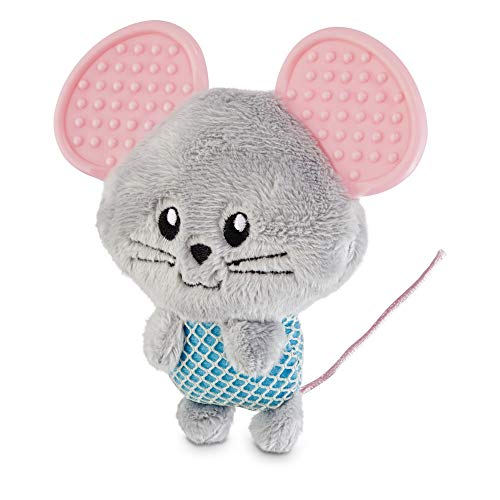
3. Toy With The Most Variety: Leaps and Bounds Little Paws Teething Mouse Toy
Expertly designed for kittens seeking a safe surface to chew.
Textured mouse ears provide a safe surface to chew.
Oversized plush head doubles as a cuddle buddy or kicker toy.
If you’re looking to limit the number of toys your kitten has and want a few multitasking ones, the Leaps and Bounds Little Paws Teething Mouse toy is for you. This mouse has a variety of textures-bumpy, firm ears and a netting wrapped body for teething gums, a soft head for cuddling, and a perfect size for packing around or kicking.
A kitten is likely to play with many different toys throughout the day. This toy may meet all of your kitten’s playful needs without the need to purchase or keep track of multiple toys. It can work as a great teether by providing your kitten with a firm, bumpy surface to massage their gums and a uniquely textured net-wrapped surface that will provide a slightly different type of chewing surface.
While this toy is very versatile, it is on the larger side, making it less desirable for some smaller kittens. It may be a better choice if you have multiple little ones at the same time. The plastic ears may be a little too hard for some kittens, again smaller ones, to chew.
Pros:
Variety of uses
Two different teething textures
Good for multiple kittens
Cons:
May be too large for some kittens
Ears may be too hard
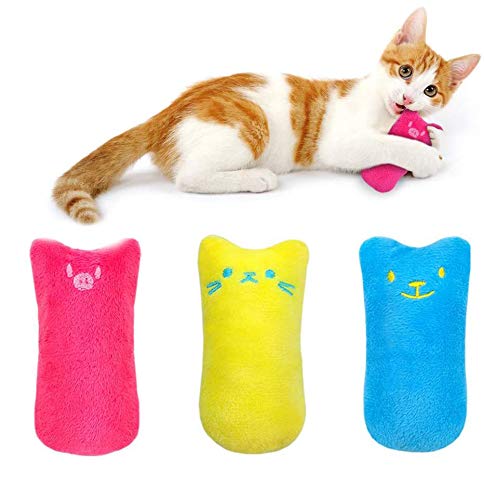
4. Best Soft Teething Toy: Ainolway Interactive Kitten Kicker Teething Toy
Made of quality plush fabric, filled with PP cotton, non-toxic, safe to use.
Fine suture of this pet toy makes it durable for biting.
Helps reduce your pets' boredom and separation anxiety by killing time with the chew toy.
If you’d rather not worry about your kitten chewing and swallowing hard plastic or rubber, or if they seem to prefer something softer, the Ainolway Interactive Kitten Kicker Teething Toy set makes a great option.
These teething toys come in a set of three different colored toys with a plush surface mixed with a cotton filling. They are soft enough for your kitten to sink their teeth into, yet durable enough to withstand teething and kicking. On top of that, they are non-toxic and infused with catnip to give them a little extra enticement. They are big enough to hug, cuddle, and kick, yet small enough for your little one to carry around.
Even though these are sewed with a heavy-duty thread, they can still come apart, especially when used by hard chewers. This means that they should not be given to your kitten except under supervision. These toys may not work for more aggressive adult cats as well.
Pros:
Plush and softly chewable
Good size for carrying and cuddling
No firm plastic or rubber to chew and swallow
Cons:
Can come unsewn
Some kittens aren’t attracted to them
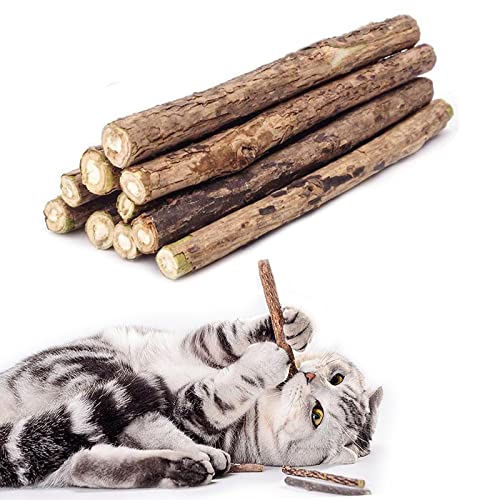
5. Best Natural Teething Toy: WoLoverSilvervine Sticks
100% natural wood from the silver vine (Matatabi) plant without additives or preservatives.
Teeth cleaning effect to improve dental health.
Silvervine plants contain cat attractants similar to catnip. Silvervine sticks are a natural plant that can also clean teeth and massage sore, teething gums while a kitten chews them. They are non-toxic and durable as well. These silvervine sticks are unprocessed and without preservatives, making them the ultimate natural teething toy.
Silvervine is a high potency cat attractant that can be increased by removing layers of the stick as your kitten uses it. This makes these teething toys long-lasting and durable. This product is also five-star guaranteed, meaning that if your kitten doesn’t love every stick, you can return them for a full refund or replacement.
This is a different sort of teething toy than most kitties are used to, so it may take a little convincing for them to try it. Even though silvervine is a natural cat attractant, it may not work for every kitten. You may need to encourage your kitten to play with it.
Pros:
All-natural
Contains cat attractant to encourage use
Durable to stand up to teething
Cons:
Some kittens might not like them
Kittens may need encouragement to use it
Best Kitten Teething Toy Buying Guide
Kittens indeed need a lot of stuff, and some of those things are more important than others. While you understand the importance of the necessities, like kitten food, a litter box, and a bed, it may be harder to understand why teething toys can be important.
Why Do Kittens Need Teething Toys?
Kittens start to lose their deciduous, or baby teeth, around 10-12 weeks of age, about the time you’re getting them settled into your home. The teething process starts with the tiny incisor teeth upfront and finishes with the molars back by around six months of age. Every kitten’s mouth is different, so this process may take nine months in some kitties.
During teething, the tooth buds from the adult teeth start to move through the jaw’s bone and towards the gums, forcing the baby teeth out. As those baby teeth are lost and the adult teeth start to break the gum line, a kitten’s gums can be very sore, swollen, and irritated, sometimes causing them to not want to eat.
The act of chewing on something can help to ease that pain and massage their sore and swollen gums, helping to get those adult teeth to poke through the gums a little bit sooner.
Teething toys can help with this teething transition by providing your kitten with either a soft or firmer surface on which to encourage the adult teeth’ eruption. Teething toys with a knobby texture can also offer pain-relieving massage that kittens are looking for. If a kitten doesn’t have any teething toys, they’re more likely to use other things as a means to relieve their discomfort, mainly your fingers, toes, or furniture.
How to Choose Teething Toys for Your Kitten
If you’re looking to give your teething kitty a little something new to chew on, you’re more than likely going to be overwhelmed by the number of teething toys available for kittens. While the numbers are nowhere near as high as chew toys for their canine counterparts, there are still plenty of options. With this in mind, it’s important to know what to look for in a teething toy for kittens.
Material: Teething toys for kittens can be made of a variety of materials. Some may be plush and soft; some may be rubber or firm plastic. Some are even made of natural silvervine or catnip plants. What’s right for your kitten will depend on their preference. Pay attention to what textures your kitten seems like better. If they are trying to chew your couch or pillows, a softer texture may be best. If they’re working on the legs of your table, a silvervine chew or firmer rubber material may be better.
Safety: Of course, you’ll want to make sure any teething toy that you get for your kitten is safe for them to use (non-toxic materials and as indestructible as possible). Rubber or plastic teething toys may be chewed into chunks, swallowed, and soft, fabric toys can be ripped open the stuffing comes out and can be eaten. Choosing a higher quality toy can help to decrease these risks, but no toy is completely indestructible. You’ll always want to supervise your kitten while they’re playing with their teething toys to avoid any mishaps.
Size: When choosing a teething toy for your little one, you’ll want one that they can fit in their mouth. Since 10-week old kittens are still pretty tiny, a smaller teething toy may be best for beginners, while a larger toy may be necessary once your kitten reaches the 5 to the 6-month-old mark. You also want to choose a size that isn’t too small and could be swallowed, especially as your kitten ages. You may also consider whether your kitty likes to pack their toys or kick and cuddle them and get an appropriate size.
Bells and whistles: The teething toy choices don’t end here. You’ll be able to choose from many different features, including various textures on the same toy, toys that double as teething toys, kicker or chase toys, and cuddle toys. You can find all different colors, products with bells, or different shapes to satisfy your kitten’s teething desires. You may also find interactive teething toys in which you can partake in your kitten’s gum-soothing play.
Final Thoughts
Of the many supplies that a kitten requires, don’t forget to stock up on some kitten teething toys. Not only can they help entertain your kitten with seemingly boundless energy, but they can also help to decrease their discomfort when it’s time for them to get their adult teeth. As a bonus, the right teething toys may spare your fingers and toes from being nibbled and your furniture from a little destruction.
Dr. Chyrle Bonk has been practicing veterinary medicine since 2010. She lives in Idaho with her husband and two sons, where they spend their free time exploring the great outdoors that is right in their backyard.
You’ve no doubt seen your cat do it, that lazy stretch up the wall followed by the digging in of their claws as they return to the floor. Or maybe you’ve witnessed your cat, with intense determination, frantically scratching at the wall with both paws as if trying to dig a tunnel. Scratching your wall can be a normal behavior for cats, but not one that you may want to promote. Let’s learn why cats scratch walls and how you can try to stop it.
Why Do Cats Scratch?
The scratching behavior is important to your cat. It’s completely natural and normal. The trouble is that it can often involve the destruction of furniture, carpets, and other things you would like to keep intact.
Reasons Why Scratching is Important for Cats:
Maintain Claw Health: Scratching helps to remove the outer layer of a cat’s claw. This layer is often flaky and needs to be removed to make way for the healthy layers underneath. Scratching also helps keep nails a comfortable length so that they don’t get so long that they cause pain. Also, scratching helps to sharpen the ends of those claws into a nice point. While sharp claws aren’t nearly as important for our housecats as cats in the wild, it’s still instinct to keep their claws sharp and ready for protective purposes.
Mark Their Territory: When a cat scratches the wall, they’re doing more than just sharpening their claws. The scratch marks they leave can tell other cats that this area belongs to them-both visually and by smell. Cats possess scent glands in their feet that leave their specific scent where they scratch. It helps other cats know who was here and when.
Stretch: A big ritual in a cat’s day is stretching. It has to be considering the amount of time that they sleep. Your cat may find all kinds of interesting ways to stretch, including standing up against your wall. Scratching also can help stretch their feet, toes, and hand legs.
Get Your Attention: Your cat may scratch the wall next to you, the door, or the place where their food is kept to get your attention. It’s hard not to notice a cat when they’re leaving their mark in places like that.
Why Do Cats Scratch the Wall?
If it makes sense to you why cats feel the need to scratch, you may still be confused about why it happens on your wall. Most of the time, cats prefer to scratch things with specific textures; think about scratching posts covered in fabric or rope. Sometimes they want something different.
Even though your cat may have every scratching post, pad, or toy on the market, it doesn’t mean they’re satisfied. Some scratching equipment for cats might be too small to achieve a good stretch while scratching, or the material might catch their nails. Instead, your cat may prefer the wall because it’s big enough to accommodate a full stretch, and it won’t obstruct their nails.
How to Keep Your Cat From Scratching the Wall
If your cat’s scratching behavior has become destructive, it’s time to steer that behavior in another direction. There’s no use in trying to keep your cat from scratching altogether. Instead, try the solutions listed below.
Use a Scratching Post: A good scratching post can be the answer to you and your cat’s needs. Observe your cat’s habits. Does your cat only scratch at the wall, or do they have other favorable spots? This will help you determine what kind of textures and orientations to consider. If walls are the preferred option, look for a large vertical surface, preferably one that you can hang in the location that they’ve been scratching.
The same goes for scratching near the door or food cabinet. Place a large, vertical scratching post in these areas. This will still allow them to draw attention to themselves without damaging your home.
You can use some attractant, like catnip, on the new scratching posts to encourage use.
Use a Deterrent: If your cat is set on scratching the wall, especially in a specific area, using a deterrent may help. You can place furniture or some other object to block the area off, or you may also try covering the area in aluminum foil or double-sided tape.
For a chemical deterrent, you may try one of many commercial sprays available on the market or some DIY solutions with essential oils that cats don’t like the smell of.
Clip Their Nails: By clipping your cat’s nails, you’re keeping them short so that your cat doesn’t have to. It will also blunt the tip so that their scratching doesn’t cause as much damage. Just be sure to use the right type of nail clipper for your cat.
Keep Them Engaged: Scratching can result from boredom or as a way to get your attention. Make sure your kitty gets their fill of together time by carving out some time for play, grooming, or snuggles every day, preferably when you first get home.
Final Thoughts
Scratching is completely natural for cats. However, it may also be something that is coming between you and your feline friend. Hopefully, if your cat is scratching the wall, some of these tips will help you maintain minimal damage while fulfilling your cat’s scratching desires.
Dr. Chyrle Bonk has been practicing veterinary medicine since 2010. She lives in Idaho with her husband and two sons, where they spend their free time exploring the great outdoors that is right in their backyard.
Some cats are picky. They only eat certain flavors, are particular about where you pet them, and only drink freshly poured water. If you know one of those cats, having one of these best cat water fountains will help you meet at least one of their particular demands and make sure they’re drinking enough water to stay healthy.
1. Best All-Around Fountain: Wonder Creature Cat Water Fountain
Stainless steel top is hygienic and dishwasher-safe.
BPA free cat fountain is safe for your pets.
360° multi-directional streams aerate the water for added oxygen and freshness.
Disassemble for cleaning and maintenance takes only a few minutes.
This cat water fountain from Wonder Creature includes a BPA-free plastic base with a stainless steel drinking bowl to maintain cleanliness and decrease bacterial and other growth. It also includes a filtration system to help remove dirt, hair, and debris so that your cat can enjoy the cleanest water possible. On top of that, the pump features an automatic shut off so if the water level gets too low, it will shut off rather than continue to operate and burn out the motor.
Another feature of the Wonder Creature water fountain is an LED light that serves as both a nightlight and a water level indicator. The calming blue light switches to red when water levels need replenishing. If you have multiple cats, you may appreciate the 360-degree drinking access as well.
One downfall with this water fountain is that the pump doesn’t last long, especially if you don’t clean it regularly. The manufacturer’s recommendations state that the pump should be cleaned every two weeks to prolong the lifespan, so if you don’t have the time for this, another water fountain may work better for you.
Pros
Automatic shut off
Water level indicator light
Includes extra filters, cleaning brushes, and mat
Cons
The pump needs to be cleaned every two weeks
Pump life may be short if not maintained properly
2. Quietest Fountain: PETKIT Cat Water Fountain
No products found.
If noise is a concern for your cat’s water fountain, the PETKIT Cat Water Fountain may be your answer. This water fountain holds 2 liters of water and operates at whisper-quiet levels, making it ideal for skittish cats or those that don’t want to be bothered when they’re getting their beauty rest. It also features an automatic pump shut off to prevent the pump motor from burning out when water levels get too low. The LED lighted water gauge reminds you when to replenish the water.
This pump is powered by a USB cable but uses little energy. It is also made of hand-washable plastic and features a quadruple filtration system to remove all water impurities, dirt, and hair.
This cat water filter is made entirely of plastic, but it is not dishwasher safe and can be difficult to clean. The pump also requires frequent cleaning to ensure that it is working correctly to keep your cat’s water clean. It also seems to get louder with time; it starts off quiet, but the pump gets noisier with use.
Pros
Large capacity
Automatic pump shut off
Quiet motor
Cons
Motor seems to get louder with use
Not easy to clean
3. Best Stainless Steel Option: WOPET Cat Water Fountain
Stainless steel construction is healthier than plastic and has a fresher taste.
Circulating filtration system uses a charcoal filter to purify the water, remove hair, dirt and food particles.
Easy to assemble and clean.
Large capacity at 2 liters.
Stainless steel is a very hygienic medium, especially for pet bowls. It is also hypoallergenic and antimicrobial, so you don’t have to worry about bacterial growth, unpleasant tastes or odors, and cleaning it is easy.
The WOPET Cat Water Fountain harnesses these benefits of stainless steel to make a water fountain that is safe and healthy for your kitty.
Not only is this water fountain made of stainless steel, but it also dissembles quickly for easy cleaning. It also contains a filter system to remove impurities and debris from water while it oxygenates it. It holds 2 liters of water, and the pump is very quiet.
However, this water fountain does not have a water level indicator, so you’ll need to careful to always keep water in it so that the pump doesn’t burn out. You’ll also need to be sure to clean the bowl and pump at least every two weeks and replace the filter every two to four weeks to ensure proper functionality.
Pros
All stainless steel
Easy to clean
Good filtration system
Cons
Can only get replacement filters from WOPET
No water level indicator
No automatic shutoff
4. Best Large Capacity Fountain: PetSafe Drinkwell ½, 1, or 2 Gallon Water Fountain
BPA-free fountain has a 2-gallon water capacity.
Adjustable water flow allows you to customize the stream your pet.
Top-rack dishwasher safe (excluding the pump) and specifically designed with no hard to reach places.
If you have multiple cats or other pets that will use the same water fountain, a large capacity unit like the PetSafe Drinkwell water fountain may be your best option. It comes in a ½ gallon, 1 gallon, or whopping 2-gallon size. Not only does it hold a lot of water, but it also has an adjustable water stream so that you can decide how much water flows through the fountain at any given time. You have to option to turn this feature off for a quieter operation.
This water fountain is also dishwasher safe, and the pump is easily cleaned. It also features a filtration system to remove impurities and debris from water for an even cleaner taste and smell, and comes with two replacement filters. It does not have a water level indicator, but you can see exactly how much water is in it with its open design.
One drawback with this unit can be the power of the pump. Some people complain that the pump has too little pressure or power to pump enough water, especially at higher flow rates. However, if this is a problem, these pumps are compatible with all Drinkwell systems, and replacement pumps are easy to come by.
Pros
Large capacity for multiple pets
Dishwasher safe
Adjustable water flow
Cons
Troubles with pump pressure
Large drinking space can lead to spillage
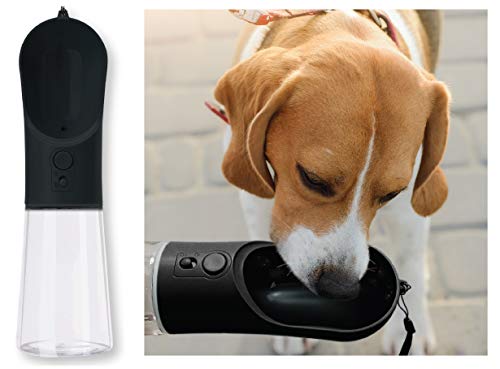
5. Best Travel Fountain: Pets First Portable Pet Water Bottle
Lightweight: Fits in your purse, can attach to your cat's leash.
Newly designed filtered water bottle combined with a carbon filter keeps water fresh & filtered at all time.
BPA Free & created with a non-toxic, strong and durable plastic.
Holds up to 1.6 cups of water.
If your kitty is on the go with you, fresh water is essential. Since some cats prefer the taste of water that they’re used to rather than that of airports, gas stations, or rest stops, carrying a little taste of home may be the only way to keep them hydrated. The portable water bottle from Pets First makes this very convenient.
This water bottle holds just over 1 ½ cups of water yet is compact enough to fit in your purse or carry-on bag. The BPA-free plastic is also leak-proof and durable. This water bottle provides a drinking space for your cat, and the filtered water flows into the cup without mixing with slobbery water. It’s an excellent option for traveling with your furry friend.
While this travel water fountain claims to be leak-proof, some leaks have been known to occur, especially after washing it in the dishwasher. You should always inspect the seals and closures before stowing it in your bag.
Pros
Compact for travel
Provides fresh water during travel
Large capacity
Cons
Not dishwasher safe
May leak, especially around seals
Best Cat Water Fountain Buying Guide
Whether you’re hearing about water fountains for cats for the first time or if you’ve been on a long and exhausting search for the perfect one, we’re here to help. There is no one-size-fits-all product, so let’s take a look at how to please your feline friend with the best cat water fountain for them.
Who Needs a Cat Water Fountain?
Cats need to drink plenty of water. Proper hydration is essential for kitties that suffer from urinary tract issues, kidney disease, or dental troubles. It’s also just important for overall health and activity. To makes things worse, some cats are very reluctant to drink. It may be because of their natural aversion to water or because they have picky taste buds that prefer a fresher taste. If this sounds like your cat, a water fountain may help increase their water consumption.
Many different things can alter the taste and odor of water. Some of those include impurities that come from the water itself. Chemicals like chlorine, fluoride, or excessive minerals can throw off the taste of water and make a demanding kitty wait for a better option to come along.
In addition to this, hair, dirt, or debris from your home can also make your cat’s water bowl more unpleasant. Water fountains for cats can help filter out those impurities and debris and oxygenate the water to give it a cleaner and fresher taste.
Water fountains may become especially important if you are traveling with your feline friend. Water tastes different depending on the source, and water from a hotel or your parent’s house may have a taste or smell that your cat will not like.
How to Choose the Best Cat Water Fountain
Now that you’re on the way to cleaner water for your cat, it’s time to think about what else you want from a water fountain. There are many options to help you customize your cat’s hydration.
Material: Cat water fountains can be made from plastic, ceramic, stainless steel, or a combination of these materials.
Stainless steel: Stainless steel is naturally more hygienic, which means it’s easier to clean. It also tends to be heavier for cats that might try to tip the fountain over. On the downside, stainless steel is often more expensive.
Plastic: A common material used for cat water fountains is plastic. It is relatively easy to clean but can harbor bacterial and other impurities. It is also lightweight, which is great for moving it around, which means your cat can do the same.
Ceramic: Ceramic is fairly easy to clean and is hygienic. It is heavy so that your cat won’t be able to push these water fountains around. However, it is fragile compared to the other materials.
Combination: Some water fountains may utilize the benefits from several different materials. For example, a stainless steel water bowl for cleanliness with a plastic base decreases the weight and cost.
Noise: This will be running 24/7 in your home, and you’ll want something with a tolerable noise level. Different pumps are going to make different levels of noise. You should choose a quieter version if the water fountain will be in your main room or if your cat is on the skittish side. A louder pump may be OK if the water fountain is placed in a back room somewhere and your cat isn’t scared of a little noise.
Capacity: The smaller the capacity of a cat water fountain, the more often you’ll have to fill it, but the less space it’ll take up. You’ll want to find one that will hold enough water for the whole day, so you don’t have to refill it in the middle of the night. For multi-cat or multi-pet households, bigger is better.
Other features: You may decide you want a water level indicator, automatic pump shutoff, a nightlight, or a dishwasher safe water fountain. There are even fountains with cute designs or mats to decrease water droplets on your floor.
To choose the best cat water fountain, you’ll need to consider your cat’s needs, along with how much effort you want to put into maintaining it.
Final Thoughts
Getting your kitty a water fountain is a great way to ensure that they are drinking enough water to keep all systems healthy. Not only does it help to provide cleaner, fresher water for them to drink, it can also be entertaining enough to spark their drinking curiosity.
To choose the best water fountain for your cat and your space, you’ll need to look at how much maintenance and noise you’re willing to put up with, as well as how much water you need it to hold compared to how much space it will take up.
Dr. Chyrle Bonk has been practicing veterinary medicine since 2010. She lives in Idaho with her husband and two sons, where they spend their free time exploring the great outdoors that is right in their backyard.
Whether they mean to or not, there may be times when your cat’s nails snag your skin, furniture, or blankets. Most of the time, your kitty will have precise control over their nails, but if those nails are allowed to grow too long, you could have some trouble.
Not only can long nails snag, but they can also be painful for your cat and can even grow into the pads of the toe if you’re not careful. Rather than risk any of these issues, be sure to trim their nails with a reliable clipper. Here is a list of the best nail clippers for your cat and an informational buying guide to help you find the perfect product.
Recommended by professionals.
Ergonomically designed and easy-to-use.
Top grade stainless steel will last for years.
Clipping cat nails is all about comfort for you and your cat. The Boshel Cat Nail Clippers are one of the best products for comfort. They have an ergonomically shaped, non-slip handle to make it easier to avoid accidental cuts, and they feature angled blades so that you can better see what and where you’re cutting.
On top of that, these clipper blades are super sharp, making a clean-cut, and are made of stainless steel to ensure years of high-quality use. They are also small in size and not cumbersome so that you won’t be fumbling around with the nail clippers while trying to hold your cat’s feet still. These clippers also have a 100% satisfaction guarantee, so you can get your money back if you don’t care for them.
However, if you happen to have bigger hands or prefer a clipper with a little more bulk, these are not the clippers for you. Some people don’t care for the angled blade, opting for a straight blade cutter instead.
Pros
Ergonomically shaped
Non-slip
Angled blades for better visualization
Cons
Too small for some hands
Won’t work for larger or tough-to-cut nails
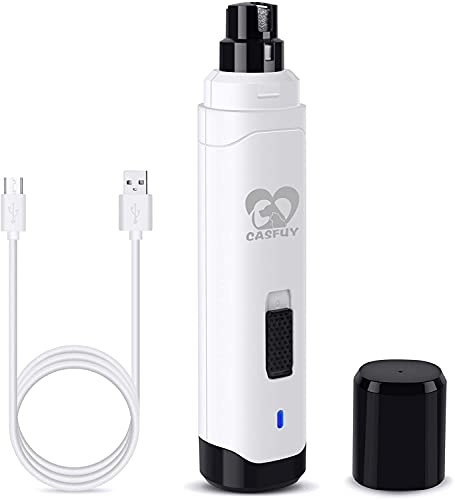
Best Electric Nail Trimmer: Casfuy Professional Electric Pet Nail Trimmer
Recommended by veterinarians and pet grooming professionals.
Super low noise & vibration.
Lightweight and ergonomic body design.
Built-in battery lasts 2 hours after a 3-hour charge.
If clipping nails terrifies you or your kitty, an electric nail trimmer like the one from Casfuy, might be the way to go. This electric nail trimmer can quickly and easily grind nails down to a manageable length. It’s also quiet and produces a low vibration to reduce stress in anxious kitties.
This electric nail trimmer is also very versatile, making it an excellent choice for multiple pets of various sizes. The adjustable two speeds allow you to work at a slow speed for smaller nails and a faster speed for larger nails.
There are also three different ports to accommodate different sizes of nails. Another great benefit is that this nail trimmer features a rechargeable battery that lasts up to two hours per charge and an indicator light to let you know how much battery life is left. The unit is also small enough that it is easy to hold without being cumbersome.
However, electric nail trimmers can cause increased anxiety in some cats. This is usually because it is noisier than regular nail trimmers and does create some vibration that can be upsetting for kitties that aren’t used to it. Also, they can trim nails too short very quickly, so care needs to be taken to prevent that.
Pros
Quiet motor, low vibration
Quickly and easily trims nails
Rechargeable battery
Cons
Can trim nails too short
Can be upset some cats
More expensive than regular nail clippers
Best Guillotine Style Nail Clippers: Pettom Cat Nail Clippers
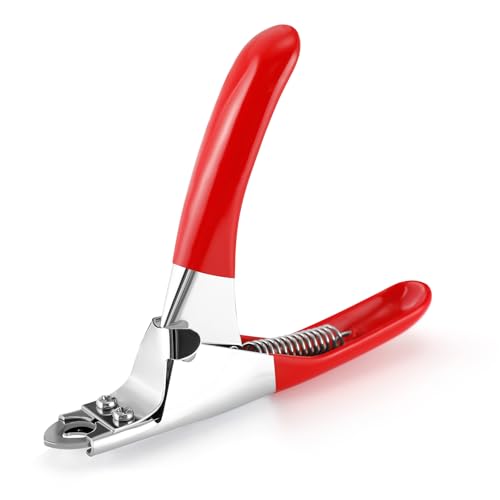
Safe and comfortable ergonomic design.
Durable stainless steel construction doesn't rust.
Safety stop blade greatly reduces the risk of cutting nails too deep.
Some cat parents and professionals swear by guillotine-style nail clippers for cats. These nail clippers have one blade that slides across a hole where you put your cat’s nail through. They provide greater visualization and only one cutting surface to decrease the chance of trimming nails too short. These clippers from Pettom are a great choice if you prefer the guillotine style of nail trimmers.
Not only are they safer to use, but these clippers are also made from high-quality stainless steel to increase durability and sharpness. They are ergonomically shaped for greater comfort and efficiency when using them. The blade is also replaceable so that you never have to deal with or worry about a dull blade that won’t cut.
This is important because if guillotine clipper blades aren’t sharp, they can crush the nail instead of cutting it.
This may make some cats and cat parents hesitant to use it. It’s also essential to ensure that all parts are in working order and replace any that are not. These clippers need to work in one smooth motion for the best results. Any hang-ups or chopping can hurt the nail.
Comes with a 90-Day money back guarantee, and 4-year warranty.
Thick stainless steel blades are strong and stay sharp for years.
15% of the profits are donated to the American Animal Rescue Society.
Pet Republique makes a scissor style nail trimmer that is small and convenient for clipping the nails of cats or even small dogs. It is made of durable stainless steel to stand up to multiple trims while retaining its sharpness for a clean cut every time. The size of these clippers allows them to easily fit into your hand without being overly large and hard to manage. They are also very affordable, making them a great choice if you’re trying to figure out what nail clippers will be the best for you and your cat.
Also, for every purchase made from the Pet Republique, a donation of 15% will be made to the American Animal Rescue Society to help rehome rescued and abandoned animals. So, if you’re looking for an easy to use and reliable nail trimmer from a company with a positive cause, these may be the trimmers for you.
These nail trimmers are for cats and small animals only. They won’t work well on larger dogs. So, if you have multiple pets of varying sizes and are looking for an all-around nail trimmer, these won’t do it for you. It’s also a must to check and retain the sharpness of these blades as dull blades can crush the nail or create a jagged cut that is rough and will catch on things.
Pros
Inexpensive
Easy to use
Durable
Cons
Not for larger dogs
Some blades may show some machining defects
Best Human-Style Nail Clippers: Jackson Galaxy Soft Grip Cat Nail Clippers
No products found.
If you’re more comfortable with human-style nail clippers for your cat’s nails, look into these from Jackson Galaxy. Even though these clippers may look like those in your bathroom cabinet, they are specifically designed for cats. They are the right size and shape to efficiently and comfortably trim any cat’s nails.
The handles feature a rubber pad for your comfort so that your fingers won’t slip or be pinched when using them. Like human nail clippers, the top handle swivels for more convenient storage and is mechanically designed to cut with less force than most other nail clippers. It is also inexpensive if you are questioning and want to give it a try.
These clippers look and work like human nail clippers. While the action and use of these nail clippers will be reminiscent of your own nail clipping, they provide less visualization of cat’s nails, so be sure to use them with caution to prevent cutting nails too short.
Pros
Familiar design and action to human nail clippers
Comfortable and easy to use
Cons
Can easily clip nails too short
Top handle swivel may be confusing if you’re not used to this style of clipper
Best Cat Nail Clippers Buying Guide
Whether you’re a new cat parent or seasoned owner, having a good set of nail clippers is a must for any cat-occupied household. Even though cats usually take care of grooming and nail care themselves, trimming their nails does carry many benefits. Having the right nail clipper is vital if you want to cut your cat’s nails and with less stress easily.
Why Do Cats Need Their Nails Trimmed?
You’ve no doubt experienced your cat clawing at furniture, the carpet, or even your leg. This is a cat’s natural way of sharpening their claws and removing the older, outer layer. It can also prevent nails from getting too long. However, most of the time, this behavior is discouraged as we would rather keep our couch and carpets in one piece.
Trimming your cat’s nails will help decrease the destruction they do when performing this natural behavior. It can also help prevent the painful repercussions that come from having nails that are too long.
When cat’s nails are left to their own growing devices without proper access to a scratching post or other structure, they can grow to the point that they curl back into the pads of the foot, creating a painful and possibly infected area. Regular trimming will help prevent this from happening and give you a chance to notice any broken or split nails before they become a bother.
Clipping your cat’s nails can also decrease the chance of an errant nail scratching you or your furniture. Cat’s nails are retractable, meaning they are under cover most of the time, but when nails get too long, they become harder and harder to conceal, allowing for accidental scratching.
Shorter and blunter nails will also cause less damage to furniture and carpets when your cat gets the urge to scratch to remove the nail’s excess outer layers.
How Do You Trim a Cat’s Nails?
Trimming a cat’s nails can be a one or two-person job, depending on your kitty’s willingness. Before attempting a nail trim, gather all necessary tools, help, and your cat. For kitties that need a little encouragement, a large bath towel or cat sack may help. You’ll want a good set of clippers and even some corn starch on hand in case you get a little blood.
Get a comfortable hold on your cat’s body and paw and push down on the footpads to extend the nails. Take notice of the pink triangular area of the nail as that is the blood supply and the area that you’ll want to avoid.
A drop of baby or mineral oil on the nail can help make that spot more visible. Using your clippers, trim off the tip of the nail just beyond the pink area. It may take several clips, especially if you’re uncomfortable and only want to take small bites at a time. Repeat with all nails.
If you happen to trim one too short and get a little blood, dabbing corn starch on the spot can help stop the bleeding. Be sure to reward your kitty for a job well done. Don’t hesitate to enlist the help of others if your cat is nervous.
How to Choose the Best Cat Nail Clippers
The style of nail clippers you choose for your cat will depend on your cat’s temperament towards nail clipping and your preference. There are many styles to choose from, including:
Scissor Style Clippers: These are exactly as they sound. They feature two cutting blades that come together in a scissoring action to clip the nail. They may be spring-loaded to facilitate clipping larger nails or not have a spring for smaller nails. This style of clippers may require a little more experience as it can be hard to see where the lower blade is cutting, making it easier to clip nails too short.
Guillotine Style Clippers: These clippers have a single cutting blade that slides over a hole for your cat’s nail to go through. They provide great visualization but may crush the nail if not kept sharp enough.
Electric Nail Grinders: These are more popular for larger dogs with thick nails that are hard to clip. These grinders use an electric motor that operates a file that grinds nails down. They are quick but can be loud, scary, and grind the nail too short, especially in cats. These usually require more experience to prevent grinding the nails too short.
Human Style Clippers: These look like, or are, exactly what you would use to clip your fingernails. They feature two cutting blades that come together and cut the nail when you push down on the upper handle. They are usually inexpensive but provide little visualization of your cat’s nail as you are cutting it and may be better suited for experienced nail trimmers.
Most beginners prefer a guillotine-style clipper, while most pet parents with multiple pets of various sizes may prefer a scissor style or electric grinder. Whichever clipper you choose, make sure that the blades are as sharp as possible and that all parts are in working order before attempting a nail trim on your kitty.
Final Thoughts
Trimming your cat’s nails may be something you need to do regularly or for your feline friend. Either way, having the right nail clippers will significantly reduce the stress and increase the job’s efficiency. Then your kitty can enjoy their comfortable paws while your household can enjoy fewer tears and scratches.
Dr. Chyrle Bonk has been practicing veterinary medicine since 2010. She lives in Idaho with her husband and two sons, where they spend their free time exploring the great outdoors that is right in their backyard.
We all want to help our feline friends age gracefully. We’ll go as far as buying them memory foam or heated beds to help ease those senior aches and pains, or even get them a set of stairs to help them climb onto your bed or furniture.
But one area that we may be neglecting in the kitty aging process is their teeth. 50-90% of cats older than four have some form of dental disease, including gingivitis, periodontitis, and tooth resorption. Many people don’t even think about trying to find the best cat food for their older cat with bad teeth. So, how do you choose a cat food that won’t cause further dental concerns?
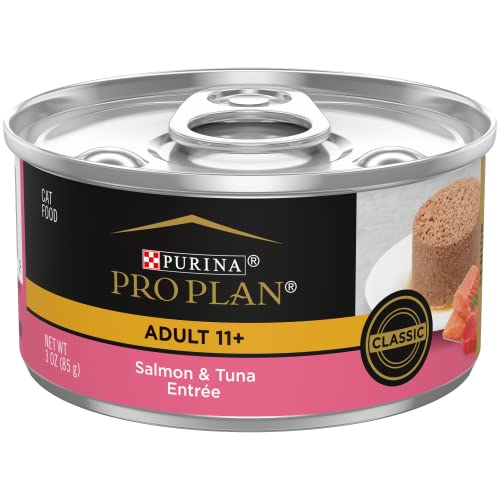
Best Overall Choice: Purina Pro Plan Senior Canned Cat Food
Specially formulated wet food for older cats (11+) made with real tuna and salmon.
Easier to chew while providing increased hydration to help keeps joints & bones healthy.
If your older kitty already is suffering from some mouth soreness, chances are you’ll be looking for a canned food that is a little gentler on the teeth and gums. When it comes to canned food, it’s hard to beat the quality and affordability of Purina Pro Plan. It’s packed with whole-meat protein, antioxidants, omega fatty acids, and all of the vitamins and minerals your kitty needs to stay at the top of their health.
Not only is this canned formula nutritious and easy to chew, but it also comes in a wide variety of flavors so that you can keep even picky senior cats interested in eating. This is something that becomes more and more difficult to do with bad teeth. This isn’t a pate type of food; there is some texture to it so that your cat won’t become bored with a puree either.
Most of Purina Pro Plan Senior canned cat food flavors contain fish, which could be a problem if your cat is allergic or if you don’t like the smell. It can smell up your house if you’re feeding a lot of it.
#1 Veterinarian Recommended and made with natural ingredients.
Specially formulated to provide optimal levels of nutrients for eye, heart, kidney & joint health for senior cats.
If your cat’s dental problems are not too bad and can still be saved, considering a dry kibble may actually help treat and prevent these issues from becoming worse. Hill’s Senior Indoor dry kibble cat food is triangular shaped and thicker to mechanically help clean your cat’s teeth while they chew.
This food contains fiber amounts properly formulated for indoor cats meaning it is highly digestible to create less waste in the litter box. The high fiber also helps to promote digestive regularity and a correct caloric balance to accommodate an indoor lifestyle without leading to weight gain and muscle loss in old age.
Hill’s Senior Indoor cat food also contains proper amounts of antioxidants and omega fatty acids for healthy skin and hair, to help decrease inflammation, and boost the immune system.
With dry kibble that is thick and triangular, senior kitties with painful mouths will have trouble eating it. This food would be better suited for cats with dental disease that are still able to chew their food.
Pros
Kibble shape helps remove plaque and tartar
Decreased litter box waste
Proper nutrition for older cats
Cons
May be difficult to chew for some cats
Some cats may not like it
Best Grain Free Option: Instinct Grain-Free Wet Cat Food Pate
Made with 95% animal protein (cage free chicken, cage free duck, or wild caught salmon) and 5% vegetables, fruits and other wholesome ingredients.
Made without grain, corn, wheat, soy, artificial flavors or preservatives.
If your cat would rather not eat grains, Instinct Wet Cat food is the way to go. This food is designed for all life stages, including older kitties. The pate texture makes it a great no-chew type food for those cats with sore mouths that may turn up their noses at other foods.
The standout of Instinct cat food is the protein. It boasts that 95% of this food is made from whole meat, making it a highly digestible protein source to promote muscle maintenance in old age. It is then balanced with fruits and vegetables to complete the nutrient profile. It also comes in many different flavors, including duck, chicken, and salmon, to keep your senior cat’s tastebuds on their toes and keep them interested in what’s in their food bowl.
However, you may need to check your sources if you order this product online. Some people have had this product arrive spoiled even before the expiration date. While this is more likely due to the distributor than the manufacturer, you’ll still want to be careful and check out every can before giving it to your cat.
100% complete and balanced nutrition, special formulas for older cats.
Purina offers a lot of product options and flavors for your cat.
With older kitties, the severity of their dental issues can vary by the day. Because of this, somedays your cat may feel like eating kibble, and some days they may need something softer, like canned food. This is where Purina Fancy Feast has you covered. They offer a wide range of senior cat foods from dry kibbles, to pates, to minced or shredded meat. Along with the variety in textures, this food comes a variety in flavors, such as chicken, turkey, tuna, salmon, liver, and trout-just, to name a few.
The different textures of Purina Fancy Feast allow you to mix and match foods depending on how your cat’s mouth is feeling and is also packed with protein, antioxidants, and the proper balance of vitamins and minerals to keep senior cats’ bodies healthy. It’s grain-free as well, should your cat need that option.
There have been some quality control issues with Fancy Feast as well, especially the canned formulas. This is more than likely on the distributor than the manufacturer, but you never can be too careful what you are feeding your cat. As with any brand of food, always inspect each can and bag before feeding.
Pros
Variety of textures to suit any dental condition
Variety of flavors to entice picky eaters
Grain-free
Cons
Cans have been known to arrive spoiled before the expiration date
Small wet flakes that are easy for senior cats to enjoy, with added Vitamin E and B vitamins to supports the health of older cats.
Also provides hydration, and is free of grain, fillers, preservatives, and by-products.
If you like to give your furry baby snacks or rewards, the DelectablesLickable Wet Cat Treats are easy to chew for sore mouths and provide the necessary moisture that most older cats crave. There’s also a variety of textures so that your cat can choose which they are comfortable chewing without sacrificing any nutrition.
This treat isn’t just empty calories. Other than water, it can provide protein, vitamins, minerals, and antioxidants without fillers, preservatives, or by-products. The variety of flavors compliment the variety of textures, giving your cat exactly what they are craving when they are craving it. Another plus is that they come in a squeezable pouch, making it easy for you to bond with your cat while giving them a treat.
This wet cat treat comes in many textures and consistencies, and some cat parents didn’t like the look of the creamier types. The meat pieces are blended in with the gravy, making more of a puree, which is great for cats with bad teeth but not so great to look at. Some people also don’t like the smell of them.
Pros
Easy to eat treat
Variety of textures and flavors
Allows for interaction while feeding your cat
Cons
The smell can bother some people
Some people may find the look of it unappetizing
Buying Guide for Cat Food For Older Cats With Bad Teeth
When your older kitty suffers from dental disease or bad teeth, the food you choose has to solve multiple problems. It needs to meet an older cat’s nutrition requirements and be safe and gentle on the teeth. Bonus points are given if the food can help improve dental health. So, see how you can find the right multimodal cuisine for your cat.
Senior Cat Nutrition
Before we get into which foods are best for our senior kitties with bad teeth, let’s do a quick overview of senior cat nutrition. Our older kitties require some special treatment when it comes to their diet, including:
Digestible Protein: Cats need protein, even more so in older kitties. Diets high in protein help maintain muscle mass and provide energy but with less chance of becoming overweight. Older kitties need a highly digestible protein due to their decreased digestive efficiency. Highly digestible proteins come from ingredients like real, whole meats rather than plant-based protein sources.
Antioxidants: Ingredients like vitamin E help reduce and repair oxidative damage to cells, a process that occurs with age in all animals. Antioxidants can be used to prolong cognitive dysfunction, or dementia, in kitties as well.
Healthy Fats: Rather than cutting fats out of an older cat’s diet, you need to be sure to provide healthy fats that contain proper amounts of omega fatty acids. These fatty acids can help reduce inflammation and promote healthy skin and coat.
Moisture: Older kitties need more moisture in their food to help combat lower kidney function and prevent dehydration.
Dental Care for Cats
We all understand that it is much easier to prevent an illness or health issue than treat one. Dental disease is no different. While most of us already find ourselves in the treatment stage, it’s essential to understand how to prevent dental disease.
First and foremost, get your veterinarian involved. Annual or bi-annual exams are a great time to get your vet’s eyes on your cat’s teeth. They will be able to spot the early stages of dental disease, as well as recommend a cleaning routine that will be manageable for both you and your cat.
It’s recommended to brush your cat’s teeth daily or at least three times a week. If this sounds crazy and unattainable to you, remember that every little bit helps. If once a week fits your schedule better, then once a week it is.
Brushing helps remove plaque and prevent tartar buildup, leading to bad breath and inflammation of the gums and connective tissues surrounding the teeth. It can also prevent tooth loss and give you a chance to catch the little things before they turn into more serious issues.
The next step is a professional cleaning. Even with regular brushing, there may be buildup that is unreachable by a toothbrush. Professional cleanings require sedation or anesthesia and will give vets a chance to get a good look at your cat’s dental health, remove any problem teeth, and treat any lingering gum issues.
Cat Food For Cats With Bad Teeth
Finally, the food that your older kitty eats can have a significant impact on their oral health. Let’s look at that in detail.
Texture: Most of the time, it’s recommended to feed your kitty hard kibble as the manual crunching helps to naturally clean teeth and prevent tartar buildup. However, in cats with severe forms of dental disease, hard kibble might be too painful to eat, causing them not to eat their food. For these kitties, soft or canned food may be more comfortable and enticing.
Shape and Size: Generally, larger kibble means more chewing, which leads to cleaner teeth. Most dental diets for cats will feature larger or more triangular-shaped kibble to encourage chewing to get as much tartar and plaque off as possible.
On the flip side, if your kitty has a sore mouth, smaller sized kibble may work better for less painful chewing.
Additives: Some dental diets will use special ingredients to help reduce tartar, plaque, and bad breath-causing bacteria buildup while promoting dental health. Some of those include sodium tripolyphosphate, zinc, and green tea.
Final Thoughts
Bad teeth, or dental disease, is a common ailment of older kitties. Finding the best food for your older cat with bad teeth can be challenging, depending on their stage of dental disease. Some food will work better to prevent dental issues, while some are better suited for those that already have pain and discomfort. Always look to your veterinarian to guide you through the best nutrition for your older cat with bad teeth.
Dr. Chyrle Bonk has been practicing veterinary medicine since 2010. She lives in Idaho with her husband and two sons, where they spend their free time exploring the great outdoors that is right in their backyard.